 comparison
Seam Roofing vs Aimed Group: Which Fits Your Project
Last Updated: November 1, 2026
Quick Summary
Seam roofing describes a category of standing seam metal roofs, not a single product, so the right choice depends on seam type, metal, gauge, and installation quality. Compare quotes on the same scope and check warranty terms. Double-lock joints suit demanding weather and long service life.
- Compare seam types: double-lock, snap-lock, and mechanically seamed systems join panels differently.
- Double-lock joints add labour but suit projects where wind uplift and water resistance are priorities.
- Ask every bidder to price the same gauge, finish, seam type, underlayment, and removal scope.
- Confirm how panel tension, alignment, seam closure, and flashing are handled during installation.
- Read full warranty terms, including exclusions and maintenance requirements, before signing.
Table of Contents
- What Is Being Compared: Seam Roofing Systems and the Aimed Group Name
- Double-Lock Standing Seam Roofing Versus Snap-Lock and Mechanically Seamed Systems
- Standing Seam Metal Roof Materials: Steel, Copper, Zinc and Painted Aluminum Compared
- Installation Quality, Oil Canning and Failure Risks to Check
- Standing Seam Roof Cost Factors and Like-for-Like Lifecycle Comparison
- Warranty, Specification and Climate Considerations for Canadian Roofs
- Metal Roofing Quote Checklist: Questions to Ask Before Choosing a Contractor
- Frequently Asked Questions
What Is Being Compared: Seam Roofing Systems and the Aimed Group Name
Seam roofing and the Aimed Group are not two equivalent roofing products, so this comparison works best as a decision guide rather than a head-to-head ranking. "Seam roofing" describes a category: standing seam metal roofs, where interlocking panels run vertically from eave to ridge and the seams are joined without exposed fasteners. Proper installation relies on the integrity of these connections, making the process of sealing metal roofing seams a critical factor in ensuring long-term weather resistance.
This matters for anyone shopping for a roof. A reader searching this phrase may be comparing a seam system against a specific supplier, or simply trying to decide between seam types. Both readings lead to the same practical checks: panel profile, seam construction, gauge, material, and installation quality. Metal Masters Inc. specializes in double-lock standing seam technology, so the guidance below focuses on what a buyer should verify regardless of supplier.
Double-Lock Standing Seam Roofing Versus Snap-Lock and Mechanically Seamed Systems
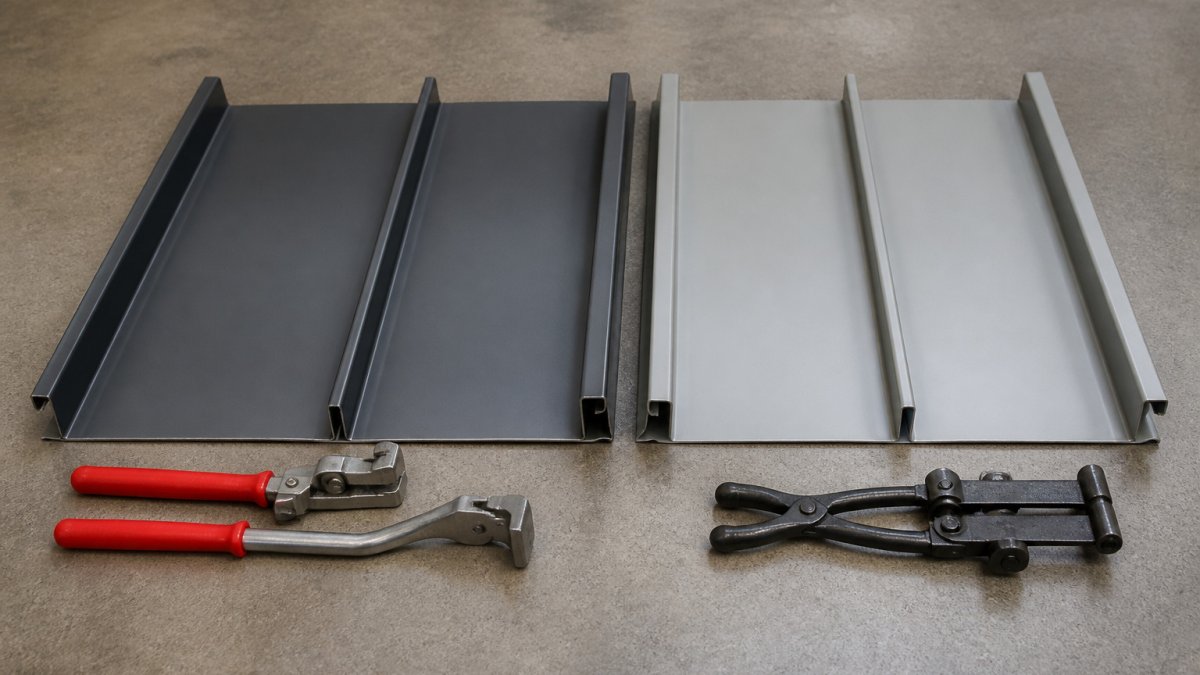
The three common seam-joining methods differ mainly in how the panel edges are locked together. Snap-lock panels press together and clip into place. For a direct look at concealed seams versus visible fasteners, see standing seam vs exposed fastener metal roofing. Mechanically seamed panels are crimped shut on site with a field seamer. Double-lock systems fold the seam twice, creating a tighter joint that many contractors prefer for demanding weather and long service life. Our double-lock standing seam benefits and installation guide covers how this joint is formed on site. A comparison from standing seam system comparison notes that neither snap-lock nor mechanically locked systems is automatically better, which is a useful starting point.
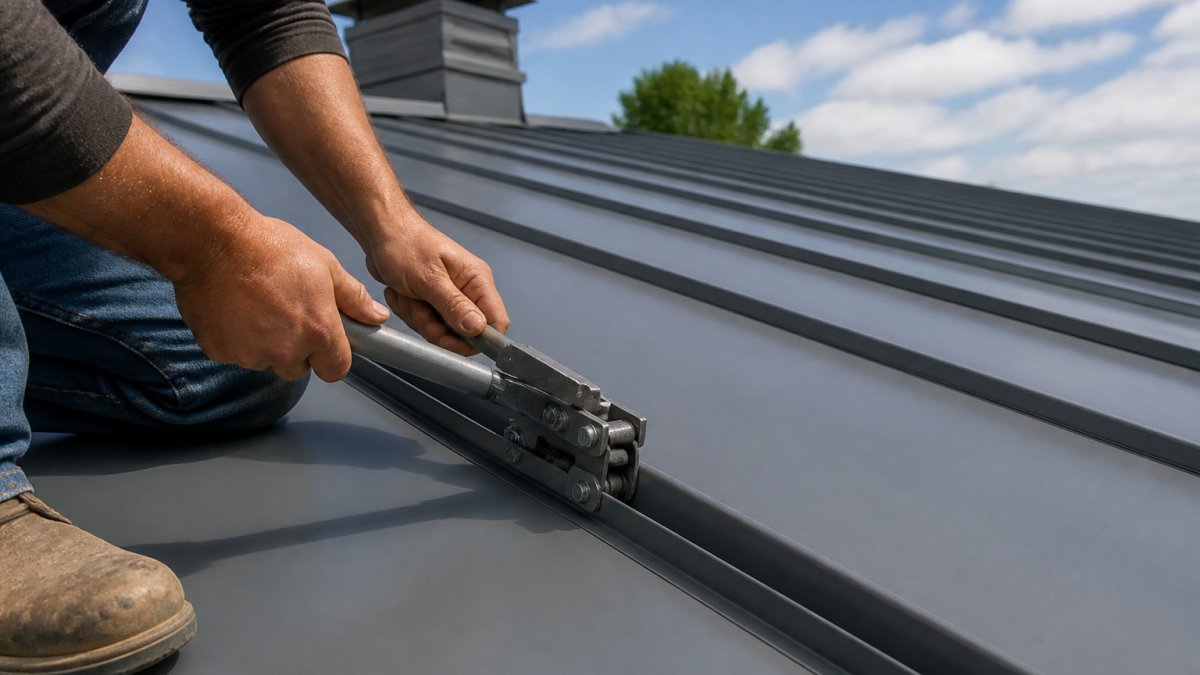
Choose by installation conditions and performance needs. Snap-lock is often quicker to install. Mechanically seamed roofs can perform well when crews are experienced. Double-lock joints add labour but suit projects where wind uplift and water resistance are the priorities. Ask any supplier to show the seam profile in cross-section and to explain how the joint is formed on site.
Standing Seam Metal Roof Materials: Steel, Copper, Zinc and Painted Aluminum Compared
Material choice shapes both appearance and lifespan. Steel is a common choice for standing seam roofs and comes in various gauges. Lower gauge numbers mean thicker metal. Copper and zinc develop patinas over time and are often specified for architectural character. If copper suits your project, our residential copper roofing installation best practices explain what to expect. Painted aluminum is lighter and resists corrosion well, though the finish needs to be specified carefully.
Each metal behaves differently at seams and fasteners, so the supplier should confirm compatibility. Metal Masters Inc. works with copper, zinc, painted aluminum, and steel, but the right choice depends on the building, budget, and the look you want. Ask which gauge and finish are specified and why.
Installation Quality, Oil Canning and Failure Risks to Check
Oil canning, the visible waviness that appears across flat metal panels, is one of the most common complaints about metal roofs. It is often driven by panel profile, gauge, fastening, and installation tension rather than the seam type alone. Many failures trace back to installation details: panels not properly aligned, seams not fully closed, or flashing poorly integrated at penetrations and edges. You can learn how to prevent oil canning on standing seam roofs in our dedicated guide.
Before signing, ask how the contractor manages panel tension and whether the crew has experience with the specific profile. Watch out: a roof that looks acceptable at handover can show waviness or seam movement after the first thermal cycle, so ask for references on similar projects and for photos of finished work. Real photos and references are a better test than brochure claims.
The article points to several installation and failure checks worth confirming before you sign.
| Check | Why it matters | What to ask |
|---|---|---|
| Oil canning | Visible waviness across flat panels | How panel tension is managed |
| Panel alignment | Misaligned panels cause failures | How alignment is verified on site |
| Seam closure | Incompletely closed seams leak | Whether seams are fully closed |
| Flashing | Poor integration at penetrations and edges | How flashing is integrated |
| Profile experience | Crews vary with specific profiles | Experience with this profile |
| Warranty references | Brochure claims are weaker evidence | Photos and references from similar projects |
Standing Seam Roof Cost Factors and Like-for-Like Lifecycle Comparison
Cost is where most seam-roof decisions are actually made, and it is also where quotes are hardest to compare. Instead of quoting a single number, build a like-for-like comparison on four lines: installed cost, maintenance and repair, energy effect, and replacement timing over a stated horizon (for example, 30 or 50 years).
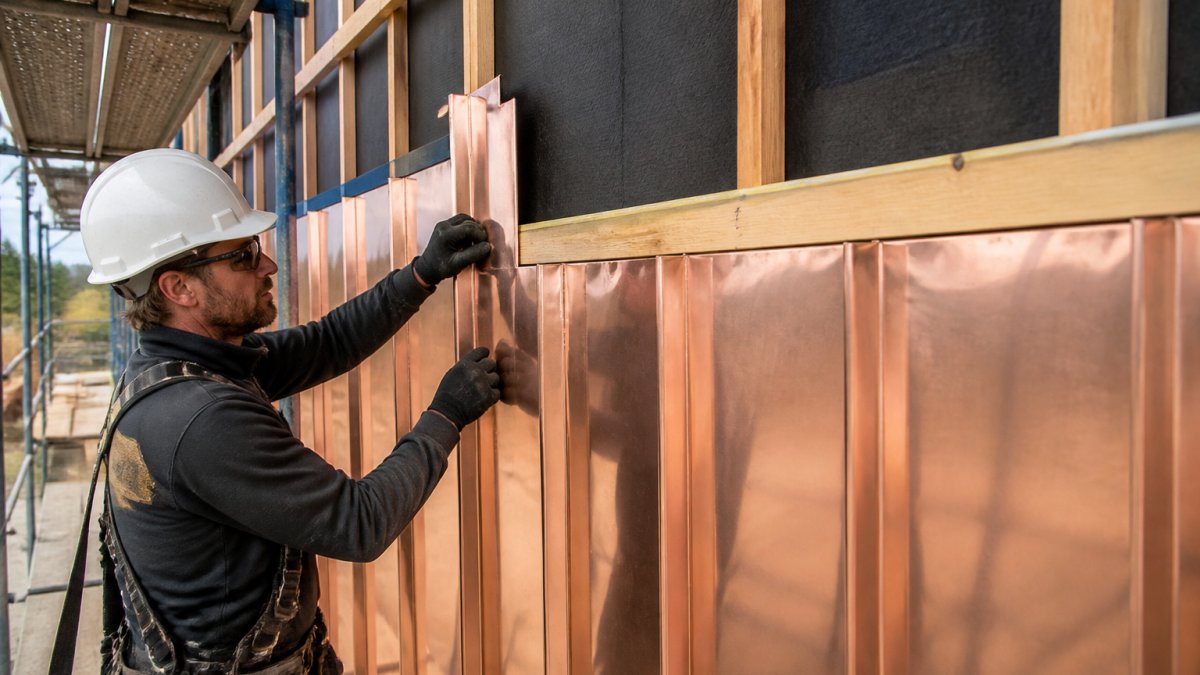
Installed cost drivers. The largest variables are metal type, gauge, roof geometry, flashing complexity, access, and whether tear-off and carpentry are included. Copper and zinc carry a material premium over steel and painted aluminum; thinner gauges lower the price but change wind-uplift and oil-canning behavior. For custom copper panels, follow our step-by-step guide to installing custom copper metal siding. Custom fabrication, dormers, valleys, and penetrations add labour. Ask each bidder to price the same scope: same gauge, same finish, same seam type, same underlayment, same removal and disposal.
Maintenance and repair. Standing seam roofs are low-maintenance, but not no-maintenance. Budget for periodic inspection of seams, fasteners, flashings, and sealant at penetrations, and for touching up finish at cut edges. Snap-lock and mechanically seamed systems may need seam re-checks after severe wind events; double-lock joints are more tolerant but cost more to install. A cheaper panel that needs earlier repair or replacement usually loses on lifecycle cost.
Energy effect. Metal roofs reflect solar radiation and shed snow, which can reduce cooling loads and snow-load risk, but the size of the benefit depends on finish, insulation, ventilation, and roof assembly. Treat energy savings as a secondary factor and get the building-science details right first.
Replacement timing. A well-specified standing seam roof on a suitable substrate is commonly expected to last decades, while lower-grade panels or poor installation shorten that window. When comparing bids, convert each to an annualized cost over its expected service life and note what warranty backs that expectation.
This guide does not quote prices because they vary by region, roof size, and scope; request written quotes and compare them on the four lines above.
Warranty, Specification and Climate Considerations for Canadian Roofs
Canadian roofs face snow load, freeze-thaw cycling, wind uplift, and rain driven at low angles, and each of these stresses seams, fasteners, and flashings differently. Specification and warranty terms should be read together, because a strong panel with a weak workmanship warranty is a weak roof.
Specification checklist. Confirm in writing: panel profile and seam type (double-lock, snap-lock, or mechanically seamed); metal and gauge for each roof area; finish system and color; underlayment and substrate; fastener type and spacing; flashing details at valleys, ridges, penetrations, and walls; and any wind-uplift or snow-load rating the supplier claims. Ask how thermal movement is accommodated at eaves, ridges, and transitions, since restrained panels can buckle or open seams.
Warranty terms. Warranties usually split into material, finish, and workmanship. Material warranties cover the metal against perforation or structural failure; finish warranties cover paint or coating against chalking, fading, or peeling; workmanship warranties cover installation defects such as improperly closed seams or poor flashing. Read exclusions: many finish warranties prorate, exclude coastal or industrial environments, or require periodic maintenance. Workmanship terms are often shorter than material terms, so check who honors them if the installer is no longer in business.
Climate and geometry. Steep pitches shed snow and water faster; low-slope and complex roofs accumulate snow and ice and need more careful flashing and ventilation. In heavy-snow regions, snow guards reduce sliding hazards and protect seams. In wind-exposed areas, seam type and fastener spacing matter more than panel color. Freeze-thaw cycles stress sealants and penetrations, so specify details that drain rather than trap water.
Code and authority. Building and roofing requirements vary by province and municipality, so confirm the applicable code edition and any local snow-load or wind-uplift requirements with the local building authority or a licensed contractor before finalizing the specification. Keep the approved drawings and product data sheets with the warranty documents.
For broader performance context, the metal roofing performance guidance discusses how roof geometry and climate affect long-term results.
Metal Roofing Quote Checklist: Questions to Ask Before Choosing a Contractor
Use this checklist to compare suppliers and contractors on equal terms:
- Which seam type is proposed (double-lock, snap-lock, or mechanically seamed), and why?
- What metal, gauge, and finish are specified for each roof area?
- Is tear-off, carpentry, and fabrication included or priced separately?
- How is panel tension and alignment controlled during installation?
- What warranty covers materials, finish, and workmanship, and for how long?
- Can you provide photos or references from comparable residential projects?
- How will dissimilar metals be kept from corroding at contact points?
- Who manages coordination with other trades, and how is the schedule communicated?
Metal Masters Inc. offers full-service metal roofing, including tear-off, carpentry, and custom fabrication, with comprehensive project management from removal to installation. To review finished work and get a quote for your project, visit Metal Masters Inc.'s website or request a free quote.
Frequently Asked Questions
What should you compare when choosing a standing seam metal roofing provider?
Compare the seam type offered (double-lock, snap-lock or mechanically seamed), the metal gauge and material, how the fasteners are concealed, the installation method and crew experience, and the written warranty terms covering both materials and workmanship. Ask whether the provider handles tear-off, carpentry and flashing in-house, since coordination gaps often cause leaks. Request references or photos of completed residential projects with similar roof geometry. Get itemized quotes in CAD so you can compare like for like rather than headline prices alone.
What is the difference between double-lock and single-lock standing seam roofing?
Double-lock standing seam panels have their edges folded over twice with a field seamer, creating a more secure, watertight joint that resists wind uplift and thermal movement better than a single fold. Single-lock or snap-lock systems join with a simpler interlocking action, which can be faster to install but may be less rigid over large panels. Neither system is automatically superior, so the right choice depends on the roof pitch, panel length, wind exposure and the installer's workmanship. Ask your contractor which seam type they recommend for your specific roof and why.
What affects the cost of a custom standing seam metal roof?
Cost depends on the metal type (steel, aluminum, zinc or copper), panel gauge, seam profile, roof area and complexity, the amount of tear-off and substrate repair, and the level of custom fabrication such as flashings and trim. Pricing also varies with quantity, project timing and delivery logistics. Metal Masters Inc. does not publish fixed prices, so request a written, itemized quote in CAD from the company directly for current pricing based on your project.
How can you assess the quality of standing seam roof installation?
Inspect the seams for consistent, tight double folds without gaps or distortion, check that panels are fastened and clipped to the manufacturer's spacing, and look for even alignment along the eave and ridge. Ask how the installer manages thermal expansion, panel tie-ins at penetrations and transitions, and oil canning prevention in the panel profile. A reputable contractor will explain each step and document the work with photos.