 Comparison
10 Factors That Set High End Custom Metal Roof Pricing in 2026
Quick Summary
A high end custom metal roof is priced as a stack of decisions, not a single rate per square foot. Metal type, panel profile, roof complexity, fabrication volume and site conditions each add or remove labour and material cost. Request an itemized quote to see what drives your custom metal roof price.
- Metal type, panel profile, roof geometry and site access are the first major price drivers.
- Ask for a premium standing seam quote with material, fabrication, labour and tear-off listed separately.
- Compare profiles on installed cost and expected service life, not on material price alone.
- Treat allowances for decking repair and custom flashing as risks to clarify before accepting a bid.
- Confirm gauge, finish, warranty and exclusions in writing before comparing bids.
Table of Contents
- What Drives the Price of a High End Custom Metal Roof
- Standing Seam Metal Roof Cost: Panel Types and Installed Pricing
- Copper vs Zinc Roofing: Price, Lifespan and Installation Trade-offs
- Custom Metal Roofing Cost Factors That Move the Final Number
- Why Custom Fabrication Costs More Than Standard Roofing
- Metal Roofing Quote Checklist: What a Complete Estimate Includes
- Requesting Your Custom Metal Roof Quote From Metal Masters Inc.
- Frequently Asked Questions
What Drives the Price of a High End Custom Metal Roof
Last Updated: November 10, 2026
Homeowners, general contractors, builders and architects often ask the same pricing questions about custom metal roofs. Buyers searching for high end custom metal roof pricing want a number, but the number depends on the system, the metal and the complexity of the roof.
We start here because the price is built from decisions, not a single rate per square foot. Several factors drive most of the cost, and this guide walks through them so you can read a quote with confidence.
Metal is the first driver. Copper, zinc, painted aluminum and steel each have different material and labour costs and behave differently over time. Panel profile is the second.
Standing Seam Metal Roof Cost: Panel Types and Installed Pricing
A standing seam metal roof is a common premium system, and its cost generally sits above corrugated and exposed-fastener panels. The reason is the seam itself.
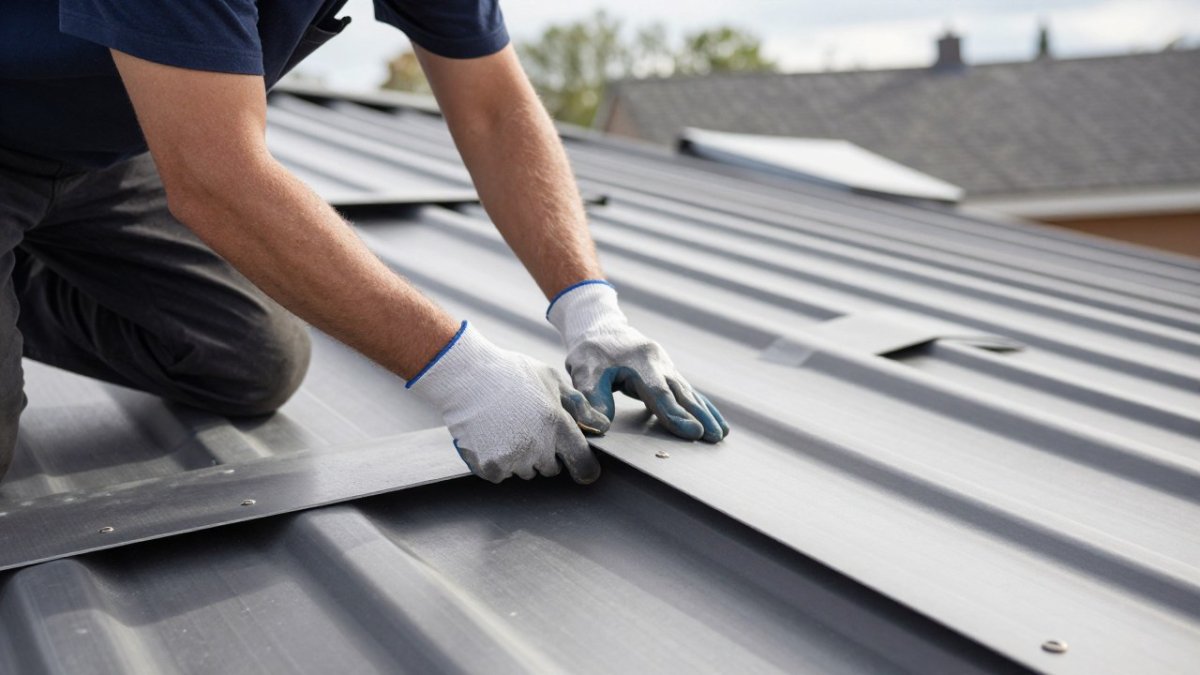
Most buyers searching for high end custom metal roof pricing want a single rate per square foot, but a premium standing seam roof is priced as a stack of line items. The panel is only one of them.
Installed standing seam pricing depends on gauge, finish, seam type, roof complexity and the quantity and dates of the work. For current pricing, visit the Metal Masters Inc. website or request a quote.
Panel type affects cost, since custom profiles and tapered or curved panels generally require more fabrication time than standard profiles.
Double Lock Standing Seam vs Other Profiles
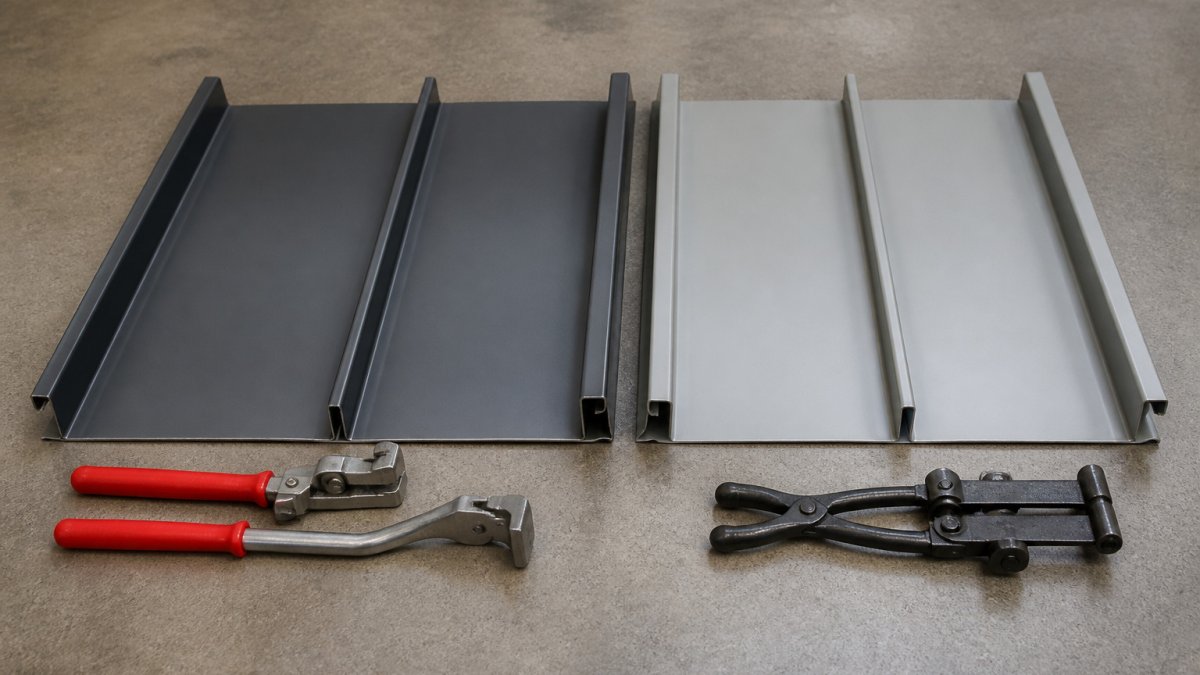
Double lock standing seam is a mechanically seamed system in which the panel edges are folded twice to form a tight joint. See the benefits and installation guide for double lock standing seam for details on how it is put together.
Compare profiles on installed cost per square foot and on expected service life, not on material price alone.
A practical way to compare is to ask each bidder to price the same roof in two profiles: a snap-lock or single-lock panel and a double lock panel, with all other scope held constant. That apples-to-apples comparison shows you what the seaming upgrade costs on your actual roof rather than in a generic table. It also exposes bids that quietly substitute a lighter gauge or a shorter panel to hit a headline rate.
Watch out: a quote that lists only a panel price per square foot, with trim, flashing, underlayment and labour folded into a single allowance, is not comparable to an itemized bid. The cheaper headline number often carries the larger allowance.
The article breaks a premium standing seam roof into the line items that make up its installed price.
| Cost line | What it covers | Why it matters |
|---|---|---|
| Material | Panel, gauge and finish | Panel type and finish set the base rate |
| Fabrication | Custom profiles and components | Tapered or curved panels take more time |
| Trim and flashing | Edge and transition pieces | Often hidden in an allowance |
| Underlayment | Protective layer beneath panels | Grade is a scope choice to confirm |
| Labour | Installation and seaming | Double lock seaming needs skilled crews |
| Tear-off and disposal | Removing and hauling the old roof | Can change the total significantly |
| Project management | Scheduling and coordination | Part of the cost of a custom roof |
Copper vs Zinc Roofing: Price, Lifespan and Installation Trade-offs
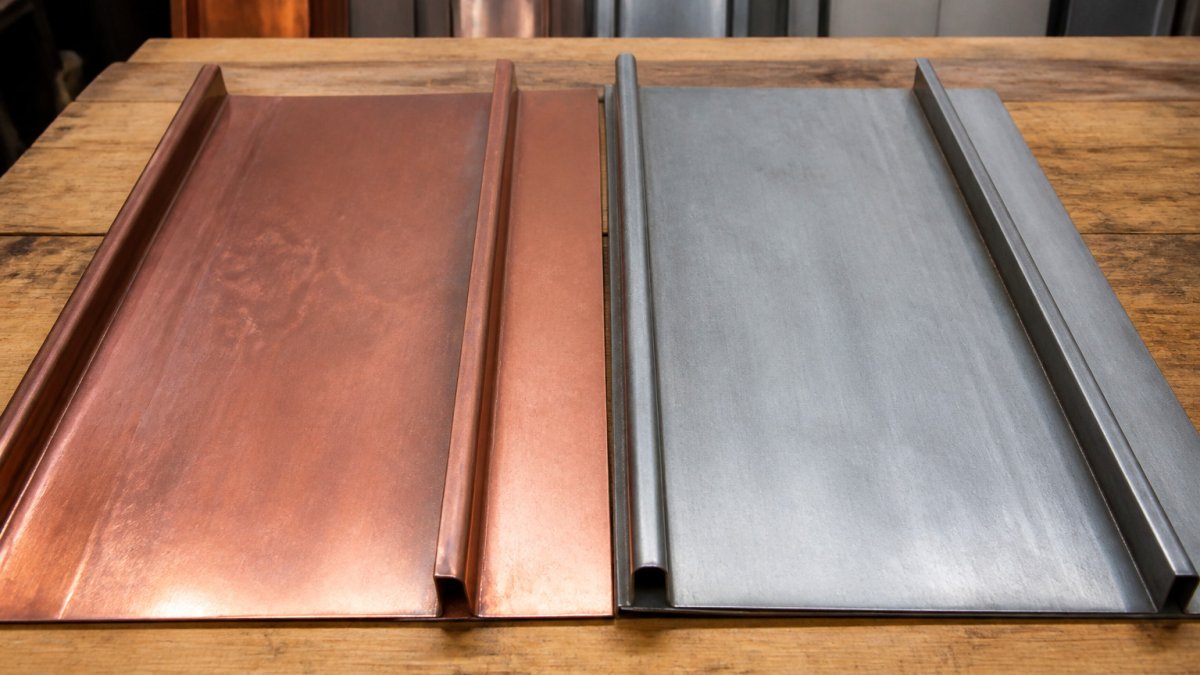
Copper and zinc are premium metals often chosen for custom architectural work. Copper develops a distinctive patina over years, and zinc weathers to a soft grey and is often chosen for its appearance and working properties.
Lifespan depends on the metal and on the detailing around it, which is why careful installation matters. Fasteners, flashing and the way the two metals meet all affect how the roof ages.
Installation also differs. Zinc requires careful handling and expansion allowance because it moves with temperature, and copper demands skilled soldering and seaming. Both are best installed by experienced professionals. Ask any installer to explain how they will accommodate movement and protect against galvanic corrosion before you commit.
Custom Metal Roofing Cost Factors That Move the Final Number
Once you know the metal and the profile, the next layer of cost comes from the roof itself. Learn how oil canning is prevented on standing seam roofs if appearance quality is a concern.
Site conditions matter as well. Limited access, steep pitch, tight working space and the need for scaffolding all add cost. Removal of an old roof, including any damaged decking that needs replacement, can change the total significantly.
Finally, scope decisions move the number. Choices such as underlayment grade, custom trim profiles or paint finish can affect the total, so each should appear in writing on the quote.
Roof Complexity, Pitch and Architectural Detailing
Roof complexity is one of the largest cost drivers on a custom project. Each change in plane, each valley and each hip or ridge requires additional cutting, bending and fitting. Architectural details such as curved eaves, custom crown moulding or bespoke flashing are fabricated to suit the design and take considerable shop time.
Pitch affects both safety and productivity. Steeper roofs need more fall protection and slower work, which increases labour cost. When reviewing estimates, confirm how pitch and complexity have been accounted for, because two roofs with the same square footage can carry very different prices.
Oil Canning, Galvanic Corrosion and Other Quality Risks
Oil canning is the wavy, distorted appearance that can show up on flat or lightly profiled metal panels. It is often linked to fabrication and installation rather than material defects, and careful panel handling, appropriate gauge selection and proper fastening help reduce the risk.
Galvanic corrosion occurs when two dissimilar metals contact each other in the presence of moisture, and it can shorten the life of the weaker metal. You can read how galvanic corrosion is prevented in metal before settling on a material pairing. It is a real concern on projects that combine copper and zinc accents, and it can be reduced through material separation, compatible fasteners and detailing that keeps the metals from touching.
Why Custom Fabrication Costs More Than Standard Roofing
Standard roofing typically uses stock panels, standard trim and repeatable installation steps, while custom fabrication builds components to fit specific drawings. That work requires shop time for bending, forming, cutting and finishing before installation.
Custom components must fit the architecture on the first attempt, which adds to the work involved compared with standard roofing.
Metal Roofing Quote Checklist: What a Complete Estimate Includes
A complete quote lets you compare bids fairly. The harder question is how to weigh two bids that both look complete but price the same roof differently. Use this checklist when reviewing any custom metal roofing estimate, and then use the comparison method below to decide between them.
- Metal type and gauge, stated per component
- Panel profile and seam type
- Underlayment, flashing and trim, listed separately
- Fasteners and any material-pairing protection
- Tear-off, disposal and any decking repair
- Scaffolding, access and site preparation
- Fabrication of custom components, itemized
- Warranty terms for materials and workmanship
- Exclusions, stated in writing
- Applicable taxes, including HST where it applies in your province
Scope exclusions deserve close attention. An estimate that leaves out tear-off, disposal or custom fabrication may look cheaper but can end up costing more after change orders. Ask the installer to confirm in writing what is included and what is not.
How to Compare Two Bids Line by Line
The most useful comparison is a side-by-side table with the same rows for every bidder. Build it from the quotes themselves rather than from summaries. Put metal type and gauge on one row, panel profile and seam type on the next, then underlayment, flashing and trim, fasteners, tear-off and disposal, decking repair allowance, scaffolding and access, custom fabrication, warranty, exclusions and taxes.
Then look for the three things that most often make a lower bid cost more:
- Allowances instead of prices. A decking repair allowance of a set amount per sheet, or a labour allowance for custom flashing, shifts risk to you. Ask what happens when the allowance is exceeded and who approves the change order.
- Gauge and finish substitutions. A bid that names the metal but not the gauge or the paint system is not comparable. Confirm the gauge per component and the finish warranty in writing.
- Missing scope. Ventilation, ice and water protection at valleys and eaves, and disposal of the old roof are common omissions. A bid that leaves them out is not cheaper; it is incomplete.
Watch out: a bid that is silent on decking condition is not the same as a bid that includes decking repair. On a tear-off over an older roof, rotted sheathing is a common finding, and the difference between an allowance and a firm price can be significant.
What a Premium Quote Should Explain
A high end custom metal roof quote should explain the fabrication scope, not just the installation scope. Ask the bidder which components are fabricated to the drawings, how custom trim and flashing are formed, and how the panels are sequenced to fit valleys, dormers and changes in plane.
Ask, too, how the quote treats project management and site coordination. On a custom roof, scheduling the fabricator, the installer and any other trades is part of the cost, and a bid that omits it will recover it somewhere else. Finally, confirm the warranty terms for both materials and workmanship, and confirm that exclusions are stated in writing rather than left to the contract's fine print.
Requesting Your Custom Metal Roof Quote From Metal Masters Inc.
Pricing for high end custom metal roofs depends on the metal, profile, complexity and site, so no published figure can replace a real assessment. To understand what your project will cost, request a custom metal roof quote from Metal Masters Inc.
If you are weighing copper against zinc, our copper vs zinc comparison explains the long-term trade-offs in more detail. Once you have chosen a material, we can also explain how to source custom zinc panel fabrication for your project.
Metal Masters Inc. specializes in double lock standing seam systems and custom sheet metal fabrication for homeowners, general contractors, builders and architects. We handle everything from tear-off and carpentry to fabrication and installation, with a focus on precise, long-lasting work.
Frequently Asked Questions
How much does a high end custom metal roof cost?
Pricing for a high end custom metal roof depends on the metal, panel profile, roof size and pitch, custom fabrication, and site conditions. Pricing depends on quantity, dates, delivery and site conditions. Request a site-specific quote to see an itemized breakdown of materials, fabrication, labour, tear-off and finishing for your project.
How does copper roofing compare with zinc roofing in price?
Copper and zinc are both premium architectural metals, and both typically cost more than painted steel or aluminum panels. The right choice depends on the design, the finish you want, and how each metal will be detailed next to other materials. Metal Masters Inc. works with copper, zinc, painted aluminum and steel.
What should a custom metal roofing quote include?
A complete quote should list the panel type and gauge, metal and finish, underlayment, flashing and trim, fasteners, tear-off and disposal, carpentry or decking repairs, custom fabrication, and installation labour. It should also state any scope exclusions and assumptions about access and site conditions. Use a metal roofing quote checklist to compare proposals on the same basis, and ask each contractor to identify what is not included.
Does roof complexity increase metal roofing installation costs?
Yes. Roof complexity, including steep pitch, multiple valleys, dormers and custom trim, increases fabrication time, cutting waste and installation labour. Ask your installer how complex details are priced so you can see where the cost comes from and whether a simpler design would meet your goals.