 How-to
How Do You Prevent Galvanic Corrosion in Metal?
Last Updated: November 4, 2026
Quick Summary
Galvanic corrosion is prevented by choosing compatible metals, isolating any dissimilar metals that must touch, and maintaining the protective coatings. Break the electrical connection with isolating washers, gaskets, or spacers, and match fasteners to the panel metal. Inspect joints regularly so damage is caught before it spreads.
- Copper against aluminum or galvanized steel is the most aggressive pairing and needs avoidance or full separation.
- Isolate both sides of every fastener, since a washer under the head alone leaves the shank conductive.
- Match fasteners to the panel metal, for example stainless fasteners with aluminum or stainless panels.
- Repair scratches and cut edges with the coating manufacturer's product before the joint is closed.
- Inspect valleys, ridges, penetrations, and laps every one to two years, and after major storms.
Table of Contents
- What Galvanic Corrosion Is and How It Happens
- Common Metal Pairings in Architectural Assemblies
- Metal Compatibility Chart for Construction
- Isolating Dissimilar Metals with Washers and Barriers
- Compatible Fasteners for Metal Roofing
- Metal Roofing Corrosion Prevention Steps for Installers and Owners
- Booking a Compatibility Review for Your Next Metal Project
- Frequently Asked Questions
Galvanic corrosion is one of the quieter ways a metal building can fail. Copper flashing next to a steel fastener, or zinc trim against aluminum panels, can corrode the weaker metal over several years without any visible warning. The damage is most often seen on high-end renovations where several metals meet on the same facade or roof. Our article on why metal siding coatings fail prematurely explains the coating side of this in more detail.
What Galvanic Corrosion Is and How It Happens
Galvanic corrosion is the accelerated attack on one metal when it is electrically connected to a different metal in the presence of moisture. The metal that corrodes is called the anode, and the more noble metal it touches is the cathode.
The Electrochemical Process Behind the Damage
Every metal has a corrosion potential, which describes how readily it gives up electrons in a given environment. When two metals with different potentials touch and moisture bridges them, a small electrochemical cell forms.
The rate depends on the potential gap and on the surface area ratio. A small anode touching a large cathode corrodes much faster than the reverse, because the large surface drives a stronger current through the small one.
The Three Conditions Required for Corrosion
Galvanic corrosion needs three things at once. Remove any one of them and the reaction slows or stops.
- Dissimilar metals with different corrosion potentials
- Electrical contact between the metals, including through fasteners or shared framing
- An electrolyte, usually water, rain, condensation, or salt-laden air
Most building failures happen where all three are present at a joint that nobody inspects.
Common Metal Pairings in Architectural Assemblies
Architectural assemblies combine metals more often than most people expect. A single roof can include aluminum panels, steel framing, copper flashing, and stainless fasteners. A facade might add zinc accents or painted aluminum trim.
Some pairings are common and risky:
- Copper against aluminum or galvanized steel is the most aggressive combination, because copper sits far above both on the potential scale
- Stainless steel against aluminum causes attack on the aluminum at contact points
- Carbon steel fasteners in copper or zinc panels can rust quickly and stain the surrounding metal
Each pairing needs a deliberate decision: avoid it, separate it, or specify a compatible alternative.
Metal Compatibility Chart for Construction
The chart below gives a working guide for common architectural metals. Use it to screen combinations during design, then confirm the specifics for your climate and exposure with a qualified professional.
| Metal Pair | Risk Level | Recommended Isolation Measure |
|---|---|---|
| Aluminum with stainless steel | High | Nylon or neoprene isolating washers under fastener heads and nuts, plus isolating tape at bearing surfaces |
| Copper with aluminum | Very high | Avoid direct contact; where unavoidable, use a full EPDM or neoprene separation layer and non-conductive fasteners |
| Copper with stainless steel | Low to moderate | Isolating barrier at contact points; stainless is close enough on the potential scale that attack is slow but staining is possible |
| Zinc with aluminum | Moderate | Isolate with coated washers and a flexible sealant; keep zinc runoff away from aluminum |
| Galvanized steel with aluminum | Moderate | Isolate contact points and keep the zinc coating intact; bare cut edges are the first failure point |
| Galvanized steel with copper | High | Avoid; copper runoff strips the zinc coating rapidly, so separate or redirect drainage |
| Carbon steel with copper or zinc | High | Replace with stainless or isolate fully; small carbon fasteners in large cathodic panels corrode fast |
| Stainless steel with stainless steel | Low | Compatible; no isolation needed unless chlorides are heavy |
| Painted aluminum with painted aluminum | Low | Compatible when coatings stay intact; repair scratches before assembly |
A pairing rated low can become high if moisture stays trapped, salt exposure is heavy, or the coating is damaged. Treat the chart as a starting point, not a final answer.
Reading the Chart Against the Area Ratio
The risk level in the table assumes roughly equal surface areas. That assumption rarely holds on a real assembly. A small anodic fastener connected to a large cathodic panel is the classic failure: the large cathode drives a strong current through the small anode, and the fastener corrodes far faster than the table alone suggests. When the anode is small and the cathode is large, move one risk level up and add isolation even if the pairing is rated moderate.
Adjusting for Exposure
Exposure changes the ranking more than most designers expect. Coastal salt, de-icing salts, industrial pollution, and persistent wetness all raise the risk of any pairing because they keep the electrolyte conductive. Sheltered crevices, under flashings, behind panels, at unvented joints, hold moisture long after the exposed surfaces dry, so a pairing that performs on an open facade can fail in a concealed lap. Because salt-laden moisture can keep concealed joints conductive, the same attention to isolation and drainage helps limit salt air corrosion in coastal HVAC systems.
Where the Chart Does Not Decide for You
The chart screens pairings; it does not replace a project-specific review. Coating systems, sealant chemistry, fastener platings, and the actual drainage path all change the outcome. A painted aluminum panel against a stainless fastener may be fine while the coating is intact and fail at every scratched hole. Use the chart to shortlist, then confirm the isolation detail, the fastener specification, and the drainage path together before fabrication.
Isolating Dissimilar Metals with Washers and Barriers
The simplest fix is to stop the electrical connection between the metals. An isolating barrier breaks the circuit, so no current flows even when water is present.
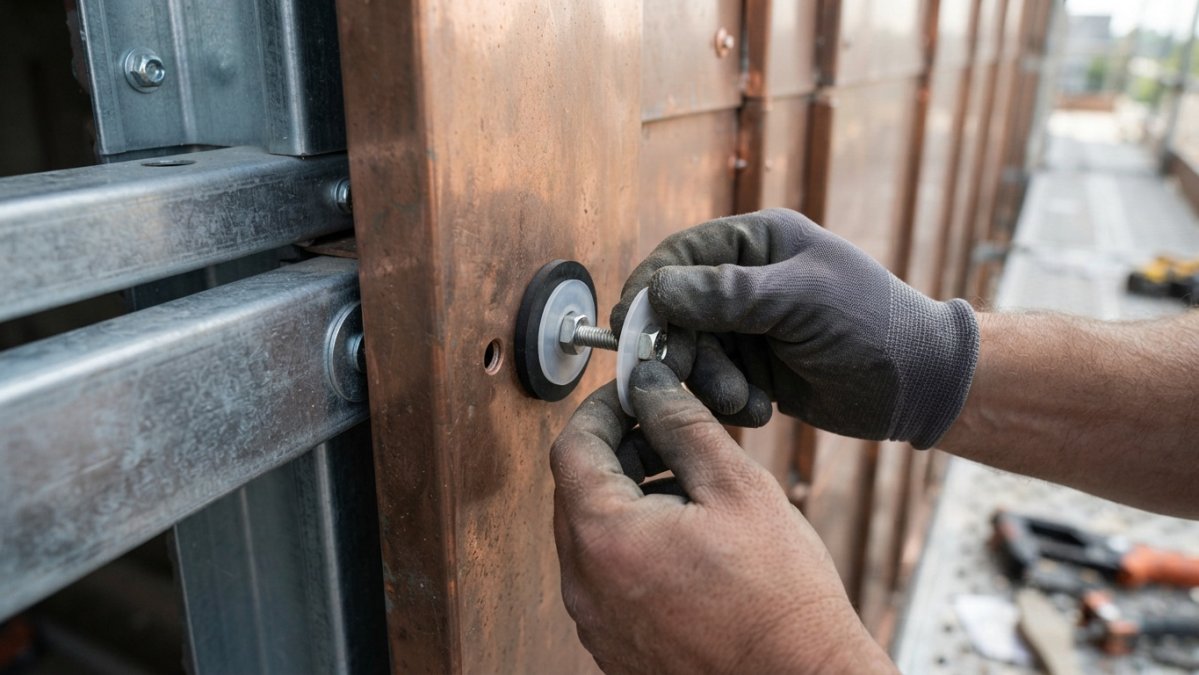
Use these barriers at every contact point:
- Neoprene or EPDM gaskets between metal panels and fasteners
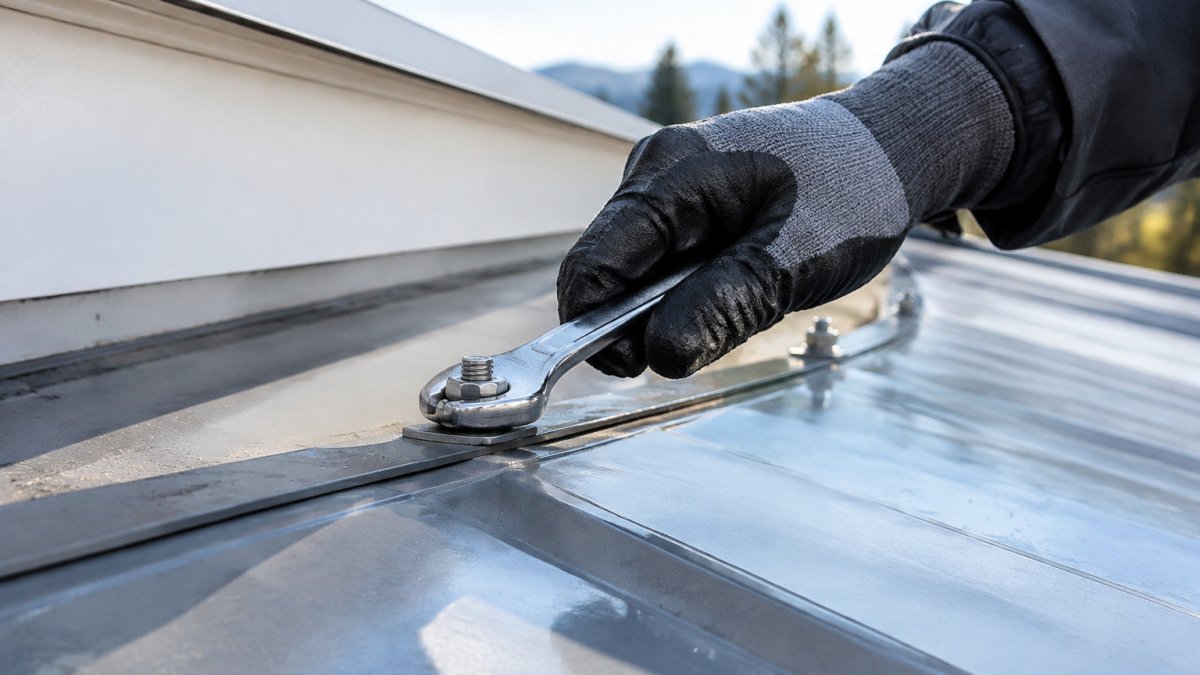
- Plastic or nylon isolating washers under bolt heads and nuts
- Non-conductive spacers where panels bear on framing
Install the barrier on both sides of the joint where possible. A washer that covers only the bolt head leaves the panel edge exposed. Check that no metal-to-metal path bypasses the barrier through the framing, sealant, or a misplaced screw.
Compatible Fasteners for Metal Roofing
Fasteners are where many roofs fail first. A small steel screw in a large aluminum or copper panel acts as a sacrificial anode and corrodes quickly.
Match the fastener to the panel metal:
- Stainless steel fasteners suit most aluminum and stainless panels
- Aluminum or stainless fasteners work best with aluminum roofing
- Copper-compatible fasteners belong with copper panels to avoid staining and attack
Where a dissimilar fastener cannot be avoided, add an isolating washer and a sealant that stays flexible over time. Check fasteners during each maintenance visit, especially at valleys, ridges, and penetrations where water collects.
Metal Roofing Corrosion Prevention Steps for Installers and Owners
Prevention starts before the first panel goes up and continues for the life of the roof. The sequence below is written for the installer on site and the owner who inherits the assembly, because most galvanic failures trace back to a step that was skipped or a barrier that was bypassed during construction.
Installation Sequence
- Review the metal pairings during design using a compatibility chart, and record the isolation method for each dissimilar joint on the drawings. Do not leave isolation as a field decision.
- Stage metals separately so copper, zinc, aluminum, and steel do not share a wet lay-down area. Runoff from one metal onto another during storage can start attack before installation.
- Install the isolating barrier before the panel, not after. Place gaskets, tape, or spacers on the framing or bearing surface first, then set the panel so the barrier cannot be shifted out of position.
- Isolate both sides of every fastener. A washer under the head only protects the top; the panel-to-framing contact at the shank still conducts. Use a sleeved or shouldered isolator where the fastener passes through metal.
- Protect coatings during handling and cutting. Cut edges, drilled holes, and scratched faces expose base metal and are the first points to corrode. Touch up cut edges and holes with the coating manufacturer's recommended product before the joint is closed.
- Seal and drain joints so water does not sit at contact points. A sealant that traps water against a dissimilar joint is worse than no sealant; detail the joint to shed water and let concealed cavities drain and vent.
- Document the isolation details, barrier type, fastener specification, and touch-up product, so the owner and future maintenance crews know what was installed.
Watch out: a single scratched panel or an unisolated fastener left during installation can start corrosion that spreads under the coating and is invisible until staining appears below the joint. Repair every scrape and confirm every isolator before the roof is closed in.
Inspection Criteria and Maintenance Intervals
Inspect at the first year after installation, then every one to two years, and after any major storm or repair. Coastal, industrial, and persistently wet sites warrant the shorter interval. Focus the inspection on the points where dissimilar metals meet and where water collects: valleys, ridges, penetrations, panel laps, and concealed flashings.
Look for these warning signs at each inspection point:
- Rust staining below a fastener or along a lap, which usually points to an anodic fastener or a failed isolator
- White powder or pitting on aluminum, which signals attack at a contact point
- Bubbling or lifting paint near a joint, which can hide corrosion under the coating
Record what you find by location and photograph the warning signs so the next inspection can compare. When an isolator is damaged or a fastener shows active corrosion, replace the isolator and the fastener rather than coating over the damage; a coating over an active cell hides the problem without stopping it.
Booking a Compatibility Review for Your Next Metal Project
Mixing copper, zinc, aluminum, and steel on a high-end project is where galvanic problems appear. A review before fabrication costs far less than replacing corroded panels later.
Metal Masters Inc. works with homeowners, general contractors, builders, and architects on custom standing seam roofing, siding, and architectural sheet metal fabrication in copper, zinc, painted aluminum, and steel. You can review our custom architectural sheet metal fabrication services before booking.
Frequently Asked Questions
What causes galvanic corrosion in architectural metal?
Galvanic corrosion occurs when two dissimilar metals are in electrical contact and exposed to an electrolyte, usually moisture carrying dissolved salts or pollutants. The metal with the more negative corrosion potential becomes the anode and corrodes faster, while the more noble metal, the cathode, is protected. In buildings this often happens where copper flashing touches aluminum panels, or where stainless steel fasteners sit in aluminum without isolation. Keeping metals apart and dry removes one or more of the three conditions needed for the reaction.
Which metals should not be used together in building construction?
Copper and its alloys should not be placed directly against aluminum or galvanized steel, because copper is far more noble and drives rapid corrosion of the other metal. Carbon steel should also be kept apart from copper and stainless steel in wet locations. Aluminum paired with stainless steel is a common concern in exterior assemblies. Where dissimilar metals must meet, use a compatibility chart, choose metals with closer corrosion potentials, and isolate the contact point with an insulating barrier.
Can stainless steel fasteners cause corrosion in metal roofing?
Yes. Stainless steel fasteners are more noble than many roofing metals, including galvanized steel and aluminum. If they are installed without an isolating washer or sealant, the surrounding panel can corrode at the fastener point, particularly where water collects. Using fasteners with compatible corrosion potential, or fasteners with a bonded EPDM washer and appropriate coating, reduces the risk. Inspect fastener heads during maintenance visits and replace any showing white or red corrosion products.
How should existing galvanic corrosion on architectural metal be repaired?
Start by removing the source of the contact and drying the affected area. Remove corrosion products with a stainless steel brush or appropriate abrasive, taking care not to damage the remaining coating. If the metal is thin or perforated, replace the affected panel or flashing. Once the surface is sound, install an insulating barrier at the contact point, apply a compatible primer and topcoat, and reseal the joint. A professional inspection is recommended to confirm the cause and that the repair is complete.