 comparison
Copper vs Zinc Roofing for Long-Term Value
Last Updated: November 2, 2026
Quick Summary
Copper vs zinc roofing depends on cost, lifespan, and how each metal behaves on a real building. Copper is the more familiar premium choice with a long track record and a warm patina, while zinc offers a more uniform appearance but moves more with temperature. Both last for decades when installed correctly.
- Copper moves less with temperature, so it is more forgiving in panel design than zinc.
- Copper runoff can stain stone, concrete, and painted surfaces below the roof.
- Zinc moves more under the same temperature change and needs extra expansion allowance.
- Zinc is sensitive to cold-weather handling and should follow manufacturer temperature guidance.
- Compare cost per year of service by dividing installed cost by expected lifespan.
Table of Contents
- Copper vs Zinc Roofing at a Glance
- Copper Roofing Pros and Cons
- Zinc Roofing Pros and Cons
- Copper vs Zinc Roof Cost and Lifecycle Value
- Copper Roof Maintenance and Cleaning
- Installation, Compatibility, and Protecting Mixed-Metal Details
- Choosing Between Copper and Zinc for Your Project
- Frequently Asked Questions
Choosing between copper vs zinc roofing comes down to cost, lifespan, and how each metal behaves on a real building, since both are the premium metals most often specified for high-end residential roofs. Metal Masters Inc. fabricates both metals for homeowners, general contractors, builders, and architects, so the comparison below reflects the questions our project teams hear most. Both metals last for decades when installed correctly, but they differ in thermal movement, how they stain surrounding materials, and how forgiving they are during installation.
This guide is for anyone deciding between the two. It covers each metal's strengths and limitations, what a like-for-like cost comparison looks like, and which factors should drive the decision for a given project.
Copper vs Zinc Roofing at a Glance
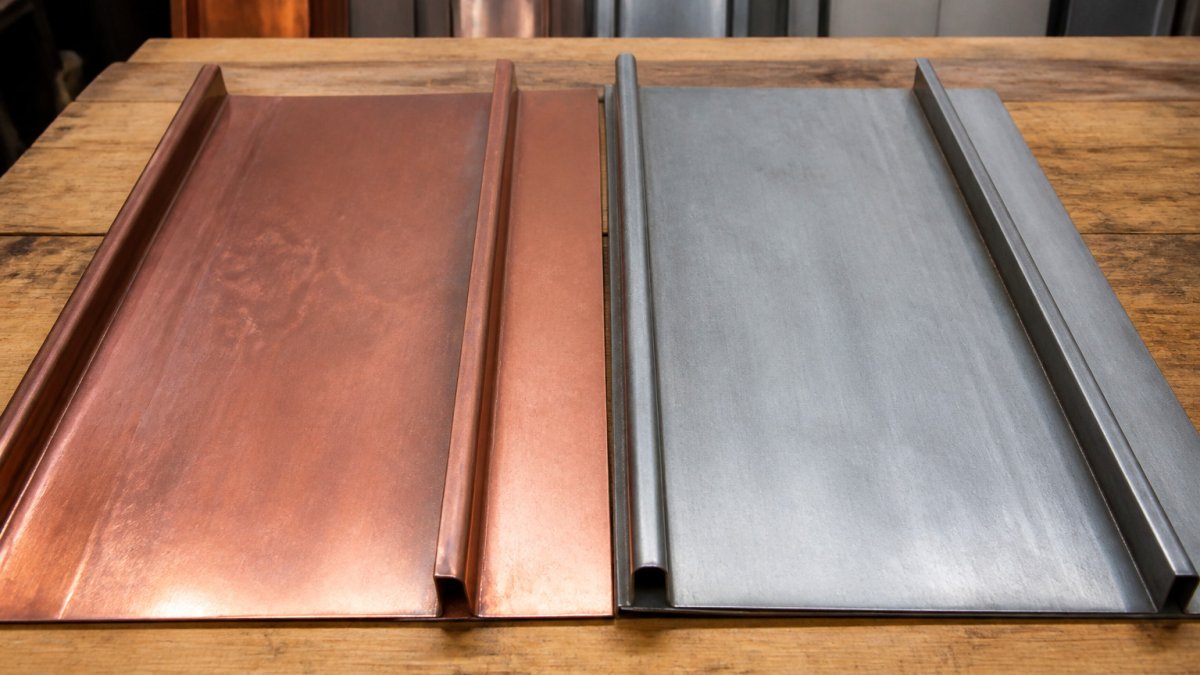
Copper is the more familiar premium choice, with a long track record and a warm finish that develops a protective patina over time. Zinc is less common on North American roofs and offers a more uniform appearance. Neither metal is maintenance-free, and both demand careful detailing at seams, penetrations, and transitions.
The practical difference shows up in three places: how much each metal moves with temperature, how runoff affects nearby materials, and how the finished roof performs over its full service life. Those three factors separate a roof that performs well for decades from one that causes callbacks.
The three factors that separate the two metals in practice are summarised below.
| Factor | Copper | Zinc |
|---|---|---|
| Thermal movement | Moves less with temperature | Moves more; needs extra allowance |
| Runoff effect | Can stain stone, concrete, painted surfaces | Less aggressive, can still leave deposits |
| Appearance | Warm finish; develops patina | Uniform appearance |
| Installation sensitivity | More forgiving | Sensitive to cold-weather handling |
| Market presence | Long track record; more familiar | Less common on North American roofs |
Copper Roofing Pros and Cons
Copper roofing has a strong reputation for longevity and resilience. Its natural corrosion resistance and the protective patina it forms over time make it a durable choice for architectural work.
The drawbacks are real. Copper is expensive, and its price is more volatile than many other roofing metals. It also expands and contracts noticeably with temperature changes, which requires careful panel design. Finally, runoff from a copper roof can stain masonry and other surfaces below, which matters on buildings with stone or light-colored finishes.
Lifespan and Weather Resistance
Copper is widely regarded as a long-lived roofing metal when properly installed, and the patina layer that forms on the surface helps protect the metal underneath.
Lifespan depends heavily on installation quality. Fastening, seam detailing, and substrate preparation determine whether the roof reaches its potential. A poorly installed copper roof will not last longer simply because the material is premium.
Thermal Movement and Runoff Staining
Copper moves with temperature changes, and that movement must be accommodated in the panel layout and the fastening system. Panels that are restrained too tightly can buckle, while panels with inadequate allowance can loosen over time. Experienced fabricators plan for this movement from the outset.
Runoff staining is the second concern. As rain washes over copper, it carries dissolved metal ions that can discolor stone, concrete, and painted surfaces below. Architects often plan drainage or protective details to manage this, particularly on high-visibility facades.
Zinc Roofing Pros and Cons
Zinc offers a distinctive, uniform appearance. It also develops a stable protective surface layer over time.
Zinc's limitations center on thermal movement. Zinc moves more than copper under the same temperature change, which makes panel design and fastening even more critical. Zinc is also less forgiving during installation, and it is not the right choice for every roof geometry.
Zinc Expansion and Installation Limits
Zinc's larger thermal movement means panels must be sized and fastened with extra allowance for expansion. Details at ridges, eaves, and penetrations need particular attention.
Installation limits also matter. Zinc is sensitive to cold-weather handling, and forming and installation should follow the manufacturer's temperature guidance.
Copper vs Zinc Roof Cost and Lifecycle Value
Cost is often the deciding factor, but the useful comparison is not the sticker price of the metal, it is the installed cost divided by the years of service the roof actually delivers. Most top-ranking pages stop at a vague "copper costs more" statement. A like-for-like view has to separate material, fabrication, installation, and the cost of detailing that each metal demands.
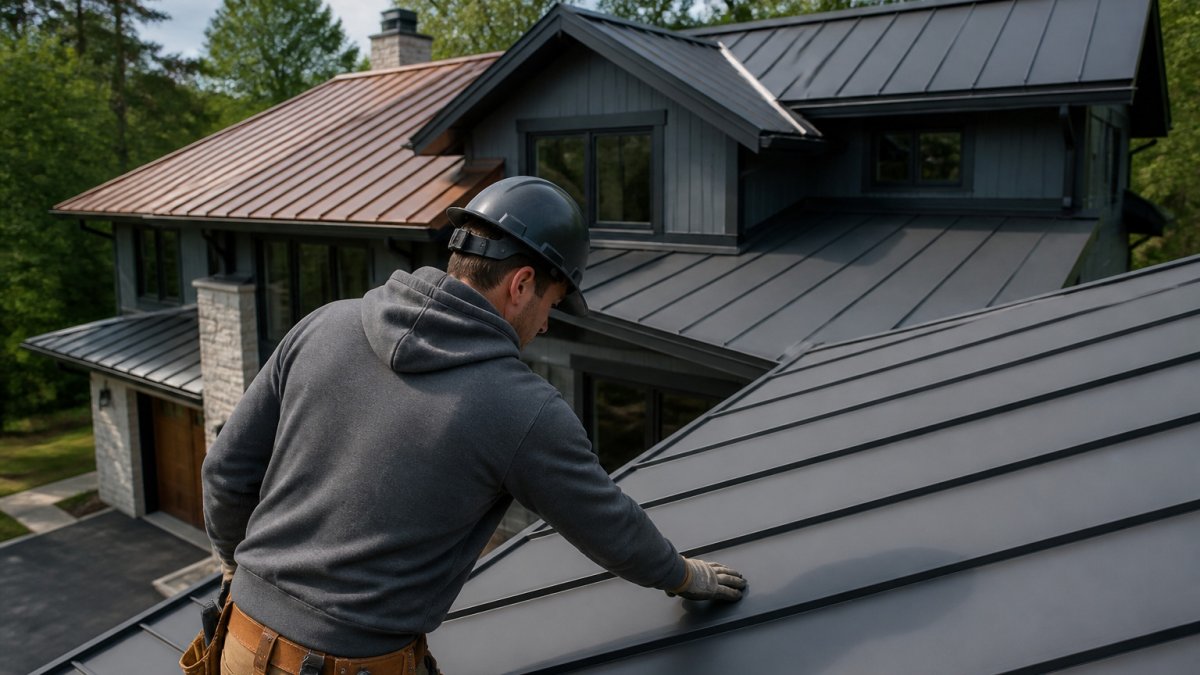
Start with the material itself. Copper is priced by weight and traded on metals markets, so its cost moves with commodity cycles and is typically quoted per pound or per square foot of coil. Zinc is also a traded metal, but architectural zinc is sold in a narrower range of gauges and finishes, and many suppliers quote it per square foot of finished panel rather than per pound.
Installation cost is driven less by the metal than by the detailing. Copper's smaller thermal movement allows longer panel runs and fewer expansion details in many designs, which can reduce labor on simple roofs. Zinc's greater movement usually calls for shorter runs, more frequent clips, and more expansion joints, which adds fabrication time and fastener count. On a complex roof with many valleys, hips, and penetrations, that difference can narrow the installed-cost gap between the two metals considerably.
A lifecycle view divides the installed cost by expected service life and adds the cost of foreseeable intervention, inspections, minor repairs, and any protective detailing needed to manage runoff. Copper's very long service life is well documented, and zinc's is also measured in decades when it is installed correctly and allowed to develop its patina. The practical calculation is: installed cost ÷ expected years of service = cost per year of service. A metal that costs more upfront but lasts substantially longer can post a lower cost per year, which is the number that should drive the decision on a long-hold building.
Watch out: quotes that mix material-only pricing with installed pricing, or that omit the cost of runoff-control details and expansion joints, will make one metal look artificially cheaper. Ask for a line-item breakdown that separates coil, fabrication, installation, and accessories.
Pricing depends on quantity, roof complexity, gauge, finish, and project timing, so the most accurate figure comes from a site-specific quote from Metal Masters Inc. at request a custom metal roofing quote.
Copper Roof Maintenance and Cleaning
Copper roofs require less routine care than many roofing systems, but they are not maintenance-free. Periodic inspection of seams, fasteners, flashings, and gutters catches small problems early. Clearing debris from valleys and gutters prevents water from pooling and staining. Regular inspections and prompt debris removal also support the durability goals behind sustainable roofing solutions, including those chosen for manufacturing facilities.
Cleaning should be gentle. Harsh chemicals can damage the patina, and aggressive scrubbing can remove the protective layer that forms over time. Most owners find that the patina develops naturally, and it is usually best left alone. Scheduled inspections with a qualified contractor keep the roof performing well for its full service life. For more on installation practices that affect how a copper roof ages, see residential copper roofing installation best practices.
Installation, Compatibility, and Protecting Mixed-Metal Details
Many premium projects combine copper and zinc, or pair either metal with steel, painted aluminum, or lead flashings. Mixing metals is a common source of problems, and the mechanism is galvanic corrosion: when two dissimilar metals touch in the presence of moisture and an electrolyte, the less noble metal corrodes preferentially. Copper and zinc sit at different points on the galvanic series, so direct contact between them, or between either metal and steel fasteners or aluminum, creates a corrosion cell that can eat into the sacrificial metal.
The fix is isolation, not avoidance. Use fasteners and clips of a compatible alloy, keep dissimilar metals separated with an appropriate barrier, and specify underlayments that are compatible with the metal above them. Some underlayments and sheathing products can be incompatible with zinc or copper, so the substrate should be chosen with the metal in mind.
Runoff compatibility is the second mechanism. Rain washing over copper carries dissolved copper ions, and that runoff can stain zinc, aluminum, concrete, and masonry below. Zinc runoff is less aggressive to adjacent metals but can still leave deposits on porous surfaces. The practical response is to plan drainage paths and transitions as one system: direct copper runoff away from zinc panels and light-colored finishes, and detail the transitions so water leaves the roof at controlled points rather than sheet-flowing across mixed materials.
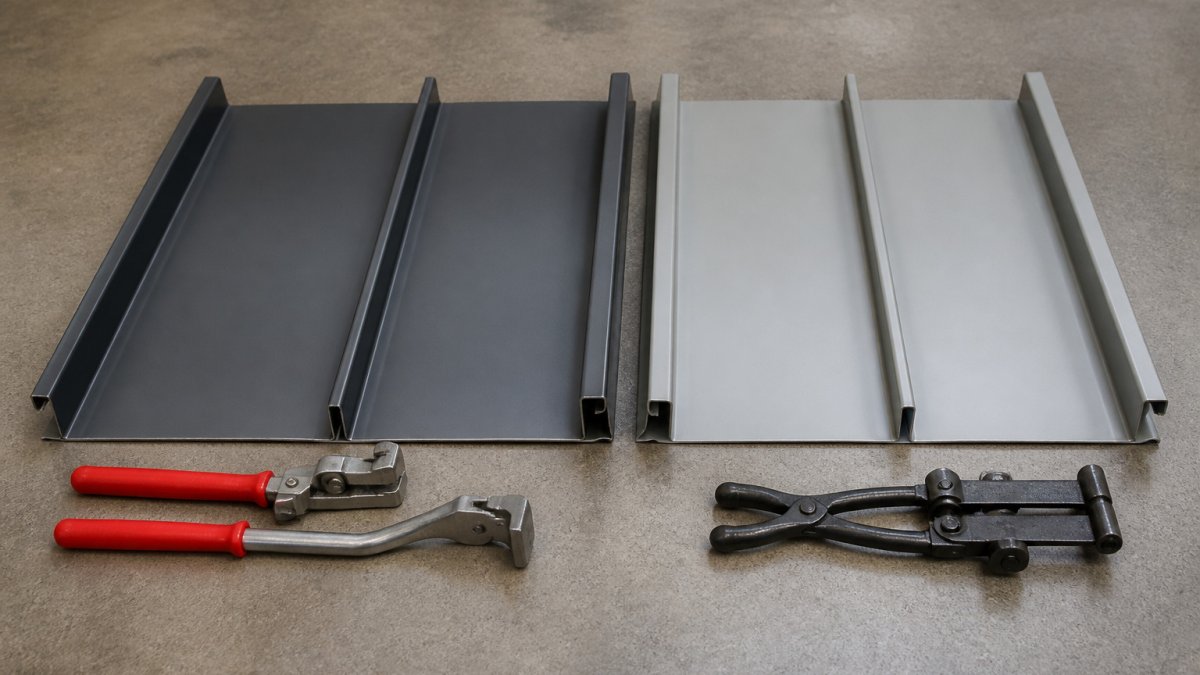
Roof pitch and expansion govern the panel design. Standing seam systems with sliding clips are the usual approach for both metals because they allow the panel to move while the clip stays fixed to the substrate. Copper moves less than zinc under the same temperature change, so zinc panels generally need shorter runs and more frequent expansion provisions. Ridges, eaves, valleys, and penetrations are where that movement concentrates, and those details deserve the most design attention.
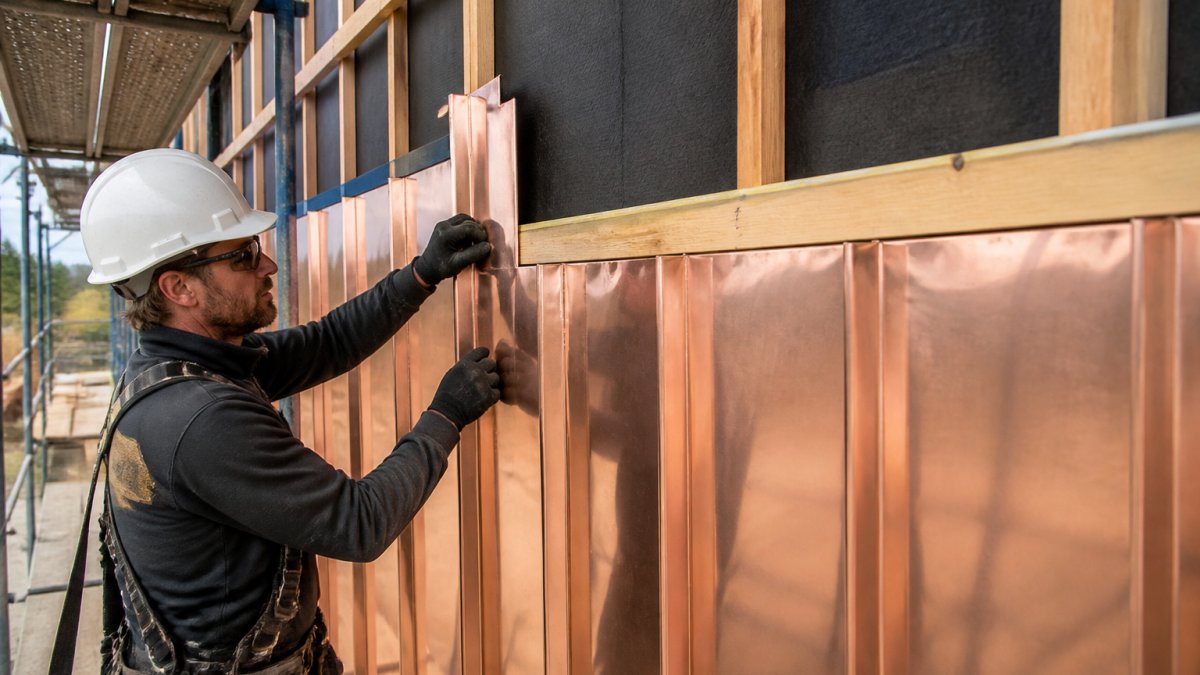
Installation sequencing matters as much as the details. Fabrication should be scheduled against substrate readiness, because panels that sit on site or get installed before the deck and underlayment are ready are more likely to be damaged or distorted.
Watch out: cold-weather handling is a real constraint for zinc, and crews should follow the manufacturer's temperature guidance for forming and installing panels. Copper is more forgiving in this respect, but neither metal tolerates being forced into place.
Choosing Between Copper and Zinc for Your Project
The right metal depends on the building, the budget, and the priorities of the owner or designer. Copper suits projects where a proven track record, a warm color, and strong longevity matter most. Zinc suits projects where a uniform appearance is a priority, and where the roof geometry and installation approach can accommodate its greater movement.
Design teams should also consider how each metal interacts with surrounding materials, especially if runoff could stain stone or masonry. A standing seam system is a common choice for both metals, and comparing standing seam and exposed fastener options can help clarify which system fits the roof. Teams weighing a seam roofing approach can also review seam roofing options before deciding.
Metal Masters Inc. handles all phases of sheet metal work, including custom fabrication, using copper, zinc, painted aluminum, and steel. Request a quote to discuss your roof, and we will walk through the options with you.
Frequently Asked Questions
What are the pros and cons of a copper roof?
Copper roofs are valued for lifespan, corrosion resistance, and appearance. Properly installed copper is a long-lived roofing metal and develops a protective patina over time. The drawbacks are higher upfront cost, thermal movement that must be accommodated in the installation, and runoff staining that can discolour masonry or landscaping below. Copper is also heavier than some alternatives, so structural suitability should be confirmed before installation. For a quote on a copper roof, contact Metal Masters Inc. through metalmastersinc.ca.
How does zinc roofing compare with copper roofing?
Zinc offers many of the same benefits, including long service life, a natural protective patina, and low maintenance. Its main difference is thermal movement, which is greater than copper's and requires careful panel design to allow for it. Pricing depends on quantity, profile, and site conditions. Both metals suit standing seam systems when installed by experienced fabricators.
Is copper cheaper than zinc?
Not usually. Copper is typically the more expensive of the two metals, and cost varies with gauge, panel profile, and the complexity of the job. Pricing depends on quantity, profile, and site conditions. Request project-specific pricing from Metal Masters Inc. for an accurate comparison.
Which roofing metal requires less maintenance, copper or zinc?
Both metals benefit from periodic inspection once installed. Copper benefits from periodic inspection of flashings, seams, and fasteners, and gentle cleaning to remove debris that can stain the surface. Zinc also benefits from inspection, particularly around expansion joints and fixings. Neither needs regular coating, but both should be checked after severe storms.