 How-to
7 Metal Siding Maintenance Best Practices That Prevent Costly Damage
Last Updated: November 7, 2026
Quick Summary
Twice a year is the right rhythm for metal siding maintenance: a full clean and inspection in spring, then a second check in fall before winter. Rinse with plain water, wash with mild detergent and a soft-bristle brush, and never use a pressure washer on metal siding.
- Spring tasks include rinsing winter grime, clearing debris, and checking for freeze-thaw damage.
- Fall is for clearing gutters and downspouts, trimming vegetation, and inspecting fasteners before snow load.
- Test a dinner-plate-sized patch in an inconspicuous spot before cleaning the whole wall.
- Keep at least a foot of clear space between plants and siding.
- Call a fabricator when a panel is loose, dented, corroded through, or above safe reach.
Table of Contents
- How Often to Maintain Metal Siding: A Seasonal Schedule That Works
- How to Clean Metal Siding Without Damaging the Finish
- Your Metal Siding Inspection Checklist for Spring and Fall
- Preventing Rust on Metal Siding: Where Corrosion Actually Starts
- Keep Gutters, Vegetation and Standing Water Away From Panels
- Finish-Specific Care for Painted Steel, Aluminum, Copper and Zinc
- Stains, Scratches and Loose Panels: When to Repair and When to Call a Fabricator
- Request a Maintenance Assessment From Metal Masters Inc.
- Frequently Asked Questions
How Often to Maintain Metal Siding: A Seasonal Schedule That Works
Twice a year is the right rhythm for most homes.
Metal siding fails from the edges inward: water sits in gutters, debris collects against panels, and unnoticed scratches corrode.
Here is how we would structure the year:
- Spring: Rinse off winter grime, clear debris, check for damage from freeze-thaw cycles.
- Summer: Spot-clean stains and touch up any scratches you found.
- Fall: Clear gutters and downspouts, trim vegetation, inspect fasteners before snow load.
Panels that fail early are often the ones nobody looked at for several years.
Here is how we would structure the year of metal siding maintenance.
| Season | What to do |
|---|---|
| Spring | Rinse off winter grime, clear debris, check for freeze-thaw damage |
| Summer | Spot-clean stains and touch up scratches found earlier |
| Fall | Clear gutters and downspouts, trim vegetation, inspect fasteners before snow load |
| Winter | Visual checks from the ground only; leave the ladder in the garage |
How to Clean Metal Siding Without Damaging the Finish
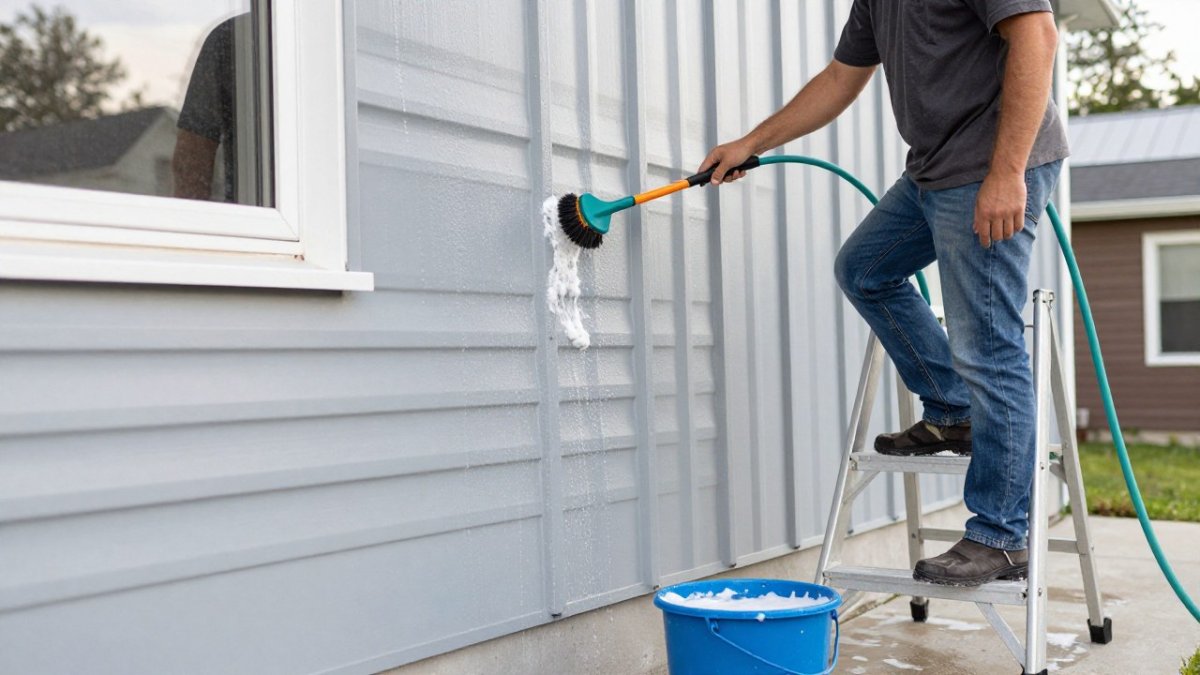
Rinse first with plain water, then wash with a mild detergent and a soft-bristle brush. The painted finish on metal panels is tough but not indestructible, and most damage comes from the wrong method rather than the wrong soap.
Step 1: Test a Small Area First
Before you touch the whole wall, clean a patch about the size of a dinner plate in an inconspicuous spot, a lower panel near a corner, or a section behind a downspout. Let it dry and compare it to surrounding panels in daylight. If the color matches and the surface feels smooth, repeat the method.
Step 2: Rinse From the Top Down
Start at the top and work down with a garden hose on a normal setting, letting water carry off loose dirt. Work in small sections and keep the hose moving so dirty water does not dry on the panels below. A wide fan setting is gentler than a narrow jet.
Step 3: Mix a Mild Detergent at the Right Dilution
Use a few drops of mild dish soap in a bucket of warm water. Concentrated soap can leave a film that attracts dust. For a specific stain, check the finish-specific guidance below first.
Step 4: Wash Only What Needs It
Scrub only the areas that need it, using a soft cloth or non-abrasive sponge for flat panels and a soft-bristle brush for textured or profiled sections. Rinse each section before it dries to avoid soap streaks, then do a final plain-water rinse from top to bottom.
Step 5: Rinse and Dry
Rinse thoroughly with plain water, again from the top down. Hard water can leave mineral spots as it dries, so wipe visible areas with a clean microfiber cloth or rinse during a light rain. Do not let soapy water dry on the panels.
Tools That Are Safe on Painted Metal
The right tools are cheap and easy to find. The wrong ones cost you a repaint.
- Soft cloth or non-abrasive sponge for flat panels.
- Soft-bristle brush for textured or profiled sections.
- Garden hose with a standard nozzle.
Watch out: never use a pressure washer on metal siding. High-pressure water forces its way behind panels and into seams, trapping moisture and starting the corrosion you were trying to prevent. For how a damaged finish leads to premature failure, read our breakdown of why metal siding coatings fail prematurely.
Finish-Specific Cleaning Notes
Painted steel and aluminum are the most forgiving: mild soap, water, and a soft brush handle almost everything. Copper and zinc are different because their finish is meant to change over time. On copper, let the patina develop naturally, harsh cleaners strip it and leave blotches. On zinc, rinse regularly to prevent white staining and never use abrasive pads.
When to Hire a Professional
Most single-story walls can be cleaned safely from the ground with an extension pole. Call a professional when the work requires a ladder above one story, when panels are steeply pitched or fragile, or when you cannot identify a stain.
Your Metal Siding Inspection Checklist for Spring and Fall
A metal siding inspection checklist is a short list of visual checks you repeat twice a year, covering the panels, trim, fasteners, and the ground around the building. You need only a notepad, binoculars, and a way to record findings so you can compare seasons.
Run through these points each spring and fall:
- Scratches, chips, or bare metal showing through the paint
- Dents or panels that look pushed in
- Loose or lifted panels and fasteners
What to Check From the Ground and What Needs a Closer Look
Most of the checklist you can do from the ground with binoculars. Look at the upper panels, trim, and roofline from a distance, that is where lifted panels and bent trim show up first.
Save the closer look for anything the binoculars flag. If you need a ladder, keep it on firm, level ground and stay off the roof itself.
Keep a Simple Maintenance Log
Write down what you find and what you did about it. A notebook or spreadsheet with four columns, date, location on the building, observation, action taken, turns a routine inspection into a maintenance record.
Many homeowners also photograph each elevation once a year from the same spot. Side-by-side photos make slow changes, fading, chalking, a new rust spot, easier to spot than memory.
Seasonal Timing That Works
Spring and fall are the right seasons for most homes. In spring, rinse off winter grime, clear debris, and check for freeze-thaw damage. In fall, clear gutters and downspouts, trim vegetation, and inspect fasteners before snow load. Summer is for spot-cleaning stains and touching up scratches. Winter is for visual checks from the ground only, leave the ladder in the garage.
Warranty and Recordkeeping
Before you start, find the manufacturer's care and maintenance instructions for your specific siding product. Most warranties require periodic cleaning and prohibit certain cleaners or methods, and unapproved products can affect coverage. Keep a copy with your maintenance log. If you are unsure which product you have, the original installer or the panel profile can usually tell you.
When to Call a Professional
Bring in a fabricator or siding contractor when a panel is loose, dented, corroded through, or above safe reach. A professional can confirm whether a repair will affect your warranty and match the profile, gauge, and finish so the repair blends in. Our guide to custom architectural sheet metal fabrication walks through what the process involves.
Preventing Rust on Metal Siding: Where Corrosion Actually Starts
Corrosion almost never starts in the middle of a panel.
This is why touch-up matters: a small scratch left alone will rust, and rust spreads under the paint film. Consistent vigilance remains the most effective strategy for preventing steel rust, a process that requires a broader understanding of environmental factors and long-term protective measures.
The other hidden cause is dissimilar metals. Our article on how to prevent galvanic corrosion in metal explains where those contact points form and how to separate them.
Watch out: never let copper debris or runoff sit on galvanized or steel panels. Even small amounts can trigger corrosion quickly.
Keep Gutters, Vegetation and Standing Water Away From Panels
Water is the enemy, and most of it arrives from three directions: clogged gutters, overgrown plants, and poor drainage at the base of the wall.
Clear gutters and downspouts every spring and fall.
Trim back tree branches and bushes so nothing rubs against the panels. Constant contact holds moisture against the surface and wears away the coating.
Finally, look at the ground. Soil should slope away from the wall, not toward it.
Finish-Specific Care for Painted Steel, Aluminum, Copper and Zinc
Different metals need different care, and treating them all the same is a common mistake. Painted steel and aluminum are low-maintenance: mild soap, water, and a soft brush handle almost everything.
- Painted steel: gentle washing, prompt touch-up on scratches, watch the cut edges.
- Painted aluminum: same routine, but check fasteners for loosening and keep dissimilar metals apart.
- Copper: let it patina naturally. Harsh cleaners strip the developing finish and leave blotches.
If you are weighing copper against zinc for a project, our comparison of copper vs zinc roofing for long-term value covers how each finish ages and what that means for upkeep.
Stains, Scratches and Loose Panels: When to Repair and When to Call a Fabricator
Handle light stains and small scratches yourself. Call a fabricator when a panel is loose, dented, corroded through, or above safe reach.
DIY territory:
- Mildew and dirt streaks that rinse off with mild soap.
- Small scratches you can clean and touch up with matching paint.
- Debris in gutters and against the base of the wall.
Call-a-professional territory:
- Loose or lifted panels that let water behind the siding.
- Rust that has eaten through the coating or the metal.
- Bent trim, displaced flashings, or damaged ridge caps.
- Any repair high up or on the roof.
A fabricator can match the profile, gauge, and finish so a repair blends in. Our guide to custom architectural sheet metal fabrication walks through what the process involves before you reach out.
Request a Maintenance Assessment From Metal Masters Inc.
Most metal siding damage we see was preventable.
Metal Masters Inc. works with copper, zinc, painted aluminum, and steel, and handles sheet metal work from fabrication through installation.
If you would rather have a professional look at your siding than guess from the ground, get a free quote from Metal Masters Inc.
Frequently Asked Questions
How often should metal siding be inspected?
Inspect metal siding twice a year, once in spring and once in fall. Spring catches winter damage such as lifted panels, scratches and debris buildup, while fall prepares the wall for freeze-thaw cycles. Between those full checks, look over the siding after any major storm. Binoculars let you scan upper panels and flashings from the ground, so you only climb a ladder when something looks wrong.
Can you pressure wash metal siding?
No. High-pressure water can force its way behind panels, soak the underlying wall assembly and strip or dull the painted finish. A garden hose with normal household pressure plus a mild detergent is enough for routine metal siding maintenance. For stubborn spots, use a soft cloth or non-abrasive sponge and rinse thoroughly. If a stain will not lift with gentle washing, treat it as a repair question rather than reaching for a pressure washer.
How do you prevent rust on metal siding?
Rust starts where the protective coating is broken, usually at cut edges, scratches, fastener heads or panel bottoms sitting in splashback. Preventing rust on metal siding means rinsing salt, dirt and debris off regularly, keeping soil and mulch below the panel base, trimming bushes so they do not rub the surface, and touching up scratches with a compatible paint before bare metal is exposed. Check cut edges and the bottom row of panels at every inspection.
What are signs that metal siding needs repair?
Watch for scratches down to bare metal, chalking or fading paint, loose or lifted panels, displaced flashings, corrosion at fasteners and cut edges, dents, and water staining on the wall below the panels. Mildew that keeps returning after cleaning points to trapped moisture. Small finish defects can often be cleaned and touched up, but loose panels, failed sealant or corrosion spreading across a sheet need a fabricator's assessment before the damage reaches the wall assembly.