 Comparison
Advantages of Double Lock Seam Systems for Metal Roofs
Quick Summary
A double lock seam folds each panel edge twice, creating a tighter interlock than a single fold. This mechanical engagement generally improves wind-uplift resistance and reduces exposed fasteners along the seam, which helps with water control. It suits roofs facing strong wind, driving rain or a demand for long service life.
- Each panel edge is folded twice, versus once for a single lock seam.
- Removing the line of exposed seam fasteners leaves fewer points for water entry.
- Uplift performance depends on gauge, clip design and spacing, not seam type alone.
- Compare installed cost itemized by panel, fabrication, seaming labor and details.
- Most failures come from installation, so verify seam formation and clip spacing.
Table of Contents
- What Makes a Double Lock Seam Different From a Single Lock Seam
- How a Double Lock Seam Is Formed and Why the Fold Matters
- Weather Resistance and Wind-Uplift Performance of Double Lock Systems
- Snap-Lock Versus Mechanically Seamed Panels: Where Double Lock Fits
- Performance on Low-Slope Roofs, Structural Strength and Lifecycle Cost
- Installation Considerations, Failure Modes and Quality Control
- Choosing a Double Lock Seam System for Your Project
- Frequently Asked Questions
What Makes a Double Lock Seam Different From a Single Lock Seam
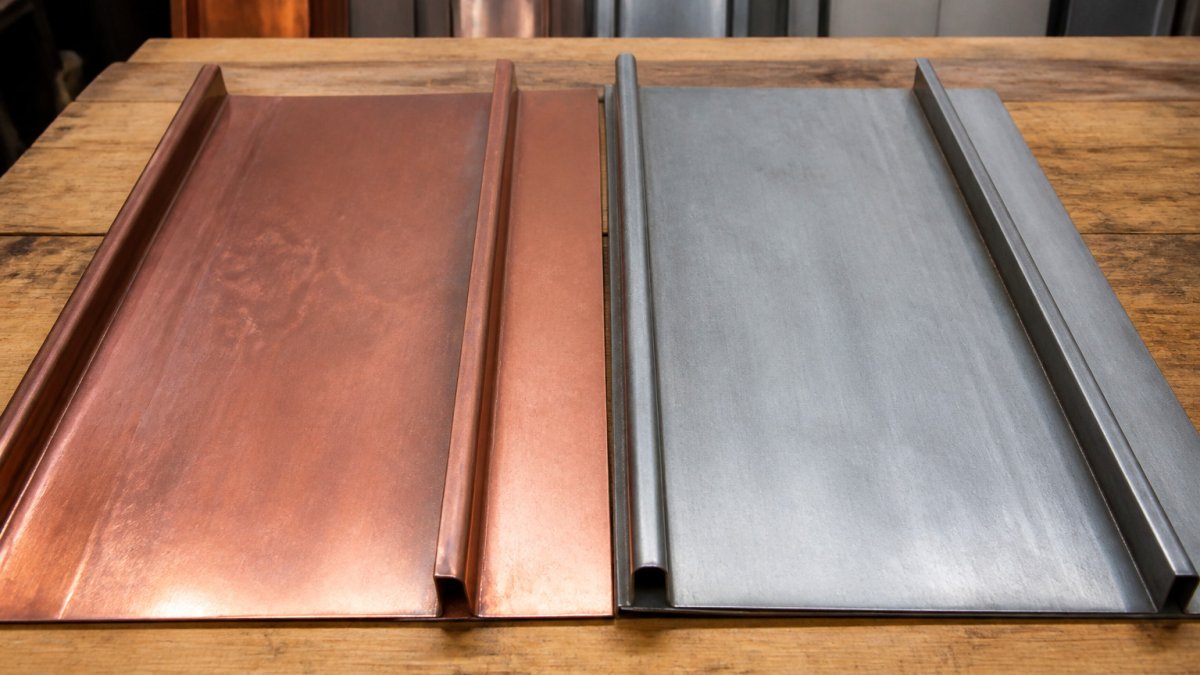
Double lock standing seam roofs are built by folding the panel edges, and the difference from a single lock seam starts with how many times the panel edges are folded. A double lock seam folds each panel edge twice, creating a tighter interlock that holds the panels together more firmly than a single fold does.
Single lock seams use one fold per panel edge. They are common on lighter residential roofs. The trade-off is a seam that depends more heavily on clips and sealing to resist movement and water entry.
Double lock seams add a second fold, so the panels lock together with more mechanical engagement. This is the main reason the system is chosen for roofs exposed to strong wind and for projects where the owner wants a long service life from the roof assembly.
Roof assemblies are part of the building envelope, so the seam design matters beyond appearance. Check the requirements in the applicable provincial or territorial building code and the manufacturer's installation instructions before selecting a seam type.
How a Double Lock Seam Is Formed and Why the Fold Matters
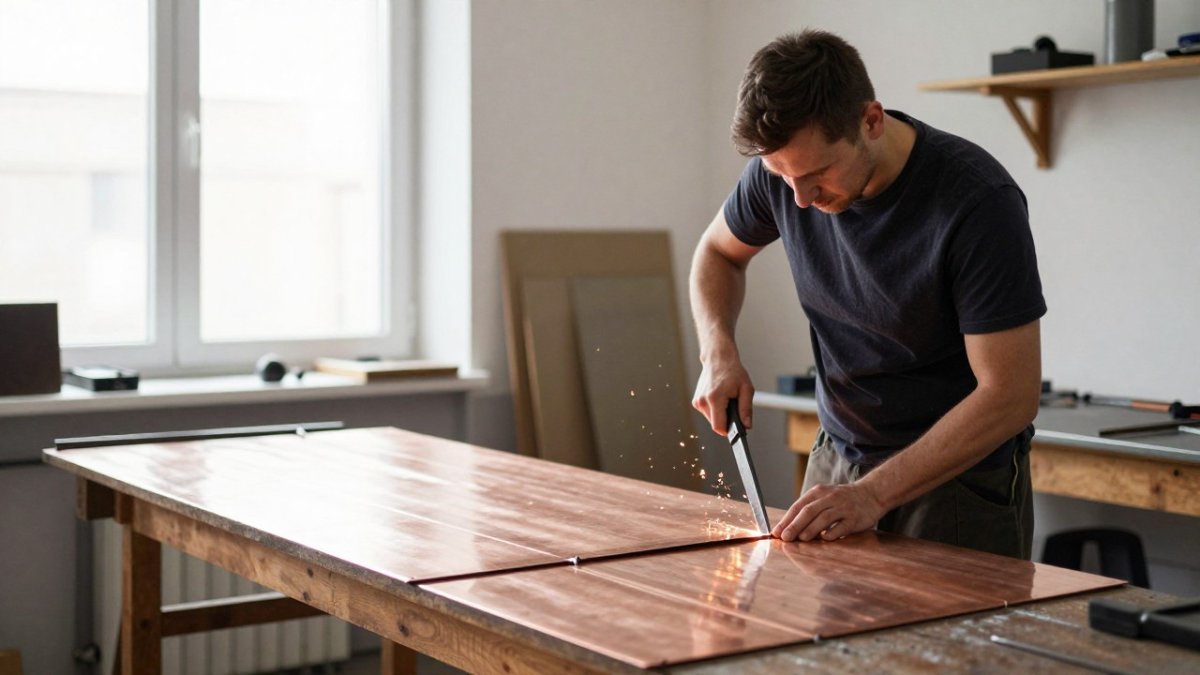
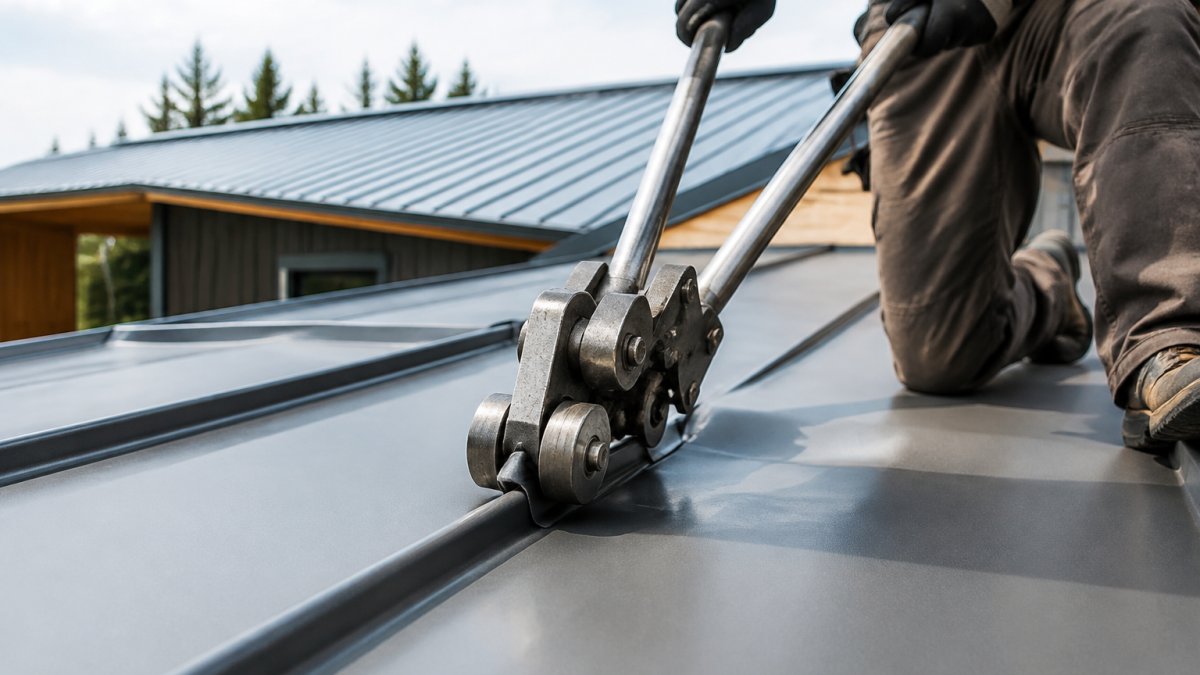
A double lock seam is formed by running adjacent panel edges through a seaming machine, which folds them over the clip and then compresses them into a second, tighter fold. The second fold is what separates it from a single lock profile.
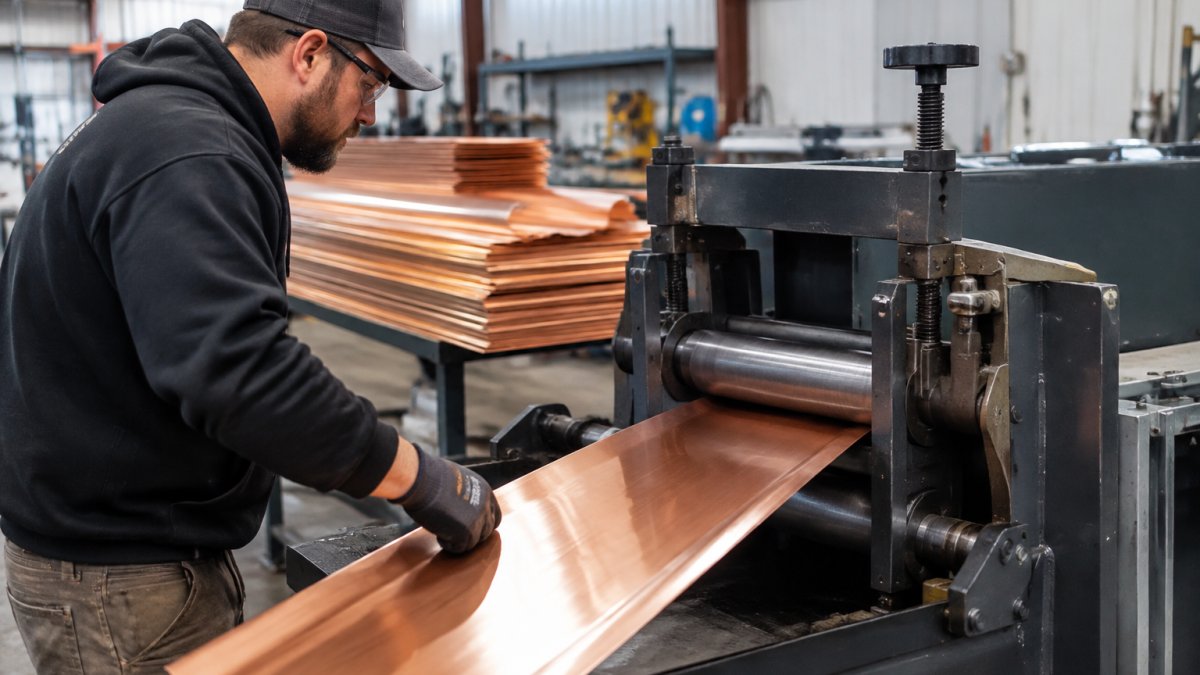
The quality of the fold depends on the seaming equipment, the panel gauge and the clip spacing. An under-formed seam can look finished but will not carry the same load or resist the same uplift. Experienced installers check the seam profile as they work, not just at the end of the day.
Fold geometry is set before panels reach the roof. Fold quality also affects how the panels expand and contract with temperature changes, which is why clip placement matters as much as the seam itself.
Weather Resistance and Wind-Uplift Performance of Double Lock Systems
Weather resistance is the main reason many specifiers choose double lock standing seam. The interlocking folds create a continuous, raised seam that sheds water and limits the paths water can take into the roof.
Water penetration. Water-penetration resistance for roof assemblies is evaluated against a recognized test standard, and the result applies to a specific tested assembly, panel profile, gauge, clip, underlayment, and substrate together.
Wind uplift. Wind pulls upward on roof panels, and the clips and seam must hold them down. A double lock seam distributes that load across more mechanical engagement than a single fold, which generally improves uplift resistance for panels of the same gauge.
Caveats that change the answer. Test results are only valid for the assembly as tested. Changing the underlayment, the clip, the panel width, or the substrate can invalidate the rating.
Watch out: a manufacturer's uplift rating quoted for a different gauge or clip spacing is not a rating for your roof. Confirm the tested assembly matches what will actually be installed, and check it against the wind design requirements in the applicable provincial or territorial building code.
How to compare systems on evidence. Rather than comparing marketing claims, line up the tested assemblies side by side: same panel material and gauge, same clip, same substrate, same test standard. Where a manufacturer cannot supply a result for the assembly you need, that absence is itself useful information.
Snap-Lock Versus Mechanically Seamed Panels: Where Double Lock Fits
Snap-lock panels are installed with a clip that the panel edges snap onto, often without special seaming equipment. Mechanically seamed panels, including double lock systems, are folded on site with a seaming machine after installation. The seaming step is the difference that matters. Because the seaming method distinguishes these systems, comparing standing seam with AG panels can clarify which approach suits a roof, as Timeless Tin explains.
Snap-lock systems are often quicker to install and suit some residential and smaller commercial roofs. Mechanically seamed double lock systems take more skill and equipment, and are generally used for more demanding exposures.
Double lock fits best where wind exposure, low slope or a long service life justify the extra installation effort. For a simple, low-exposure roof, a snap-lock system may be a reasonable choice. Compare both against the project's exposure and budget before deciding.
Performance on Low-Slope Roofs, Structural Strength and Lifecycle Cost
Low-slope roofs drain water more slowly, so the seam has to resist standing water and wind-driven rain. Double lock systems are often specified for these roofs because the raised, interlocked seam offers better water control than many exposed-fastener alternatives.
Structural strength. Load resistance depends on the panel gauge, the substrate, the clip spacing, and the span between supports. Heavier gauges and closer clip spacing increase load resistance, but they also raise material and labor cost. The structural design should be confirmed by the engineer of record for the project, and the panel manufacturer's span tables are the practical starting point.
Total installed cost. The installed price of a double lock roof is the sum of several parts, and comparing only the panel price misleads. The main components are:
- Panel material and gauge, copper, zinc, painted aluminum, and steel sit at different price points, and heavier gauges cost more per square foot.
- Fabrication, custom panels are formed to length, so roof geometry, penetrations, and waste affect the total.
- Seaming equipment and labor, mechanically seamed panels require a seaming machine and crews trained to run it, which adds labor hours and equipment cost compared with snap-lock.
- Access and tear-off, height, access, and removal of the existing roof change the labor picture substantially.
- Details and penetrations, curbs, vents, and transitions take more time on a seamed roof than on a simple field.
Because pricing depends on all of these, request a written quote that itemizes them rather than a single square-foot number.
Lifecycle economics. Lifecycle cost is where double lock often pays back. Fewer exposed fasteners mean fewer points for leaks and fewer maintenance visits, and the seam is designed to accommodate thermal movement rather than fight it. The comparison that matters is total cost of ownership over the expected service life: installed cost plus expected maintenance, minus residual value at replacement.
Roof-specific selection guidance. Rather than treating one seam type as universally best, work through the inputs that actually decide the answer:
- Slope and drainage, flatter roofs and complex geometry put more demand on water control.
- Wind and exposure, high-wind and driving-rain exposures favor more mechanical engagement.
- Building use, occupied buildings with sensitive contents justify more weather-tightness and fewer penetrations.
- Geometry, many penetrations and transitions raise installation cost and the value of a robust seam.
- Local code and approvals, confirm the assembly against the applicable provincial or territorial building code and any tested-assembly requirements.
- Budget and schedule, snap-lock can be the rational choice on simple, low-exposure roofs where the extra seaming effort buys little.
Watch out: a lifecycle comparison that assumes the same maintenance regime for both systems is not a comparison. Use the maintenance interval the manufacturer actually recommends for each assembly, and confirm warranty terms cover the installed assembly rather than the panel alone.
Installation Considerations, Failure Modes and Quality Control
Most double lock failures come from installation, not the product. The common issues are clip spacing that is too wide, seams that are not fully formed, panels fastened to a substrate that cannot carry the load, and thermal movement that was not allowed for.
Watch out: an under-formed seam can pass a visual check but fail under wind or thermal cycling. Ask the installer how seam formation is verified.
Oil canning, the visible waviness that can appear in flat metal panels, is another concern. It is driven by panel width, gauge, the flatness of the substrate and how the panels are handled and fastened. Setting the panel tension and fabrication tolerances correctly helps prevent it.
Quality control should include checking the seam profile during installation, confirming clip spacing against the drawings, and inspecting the completed roof for seam integrity. Metal Masters Inc. manages the project from removal through installation.
The article points to a short list of common installation problems and the checks that catch them.
| Issue | Cause | Check or fix |
|---|---|---|
| Seam looks finished but fails | Under-formed seam | Ask how seam formation is verified |
| Failure under load | Clip spacing too wide | Confirm spacing against drawings |
| Panels cannot carry load | Substrate cannot carry load | Check substrate capacity before fastening |
| Stress or buckling | Thermal movement not allowed for | Plan for thermal movement in design |
| Visible waviness in panels | Panel width, gauge, substrate flatness, handling | Set panel tension and fabrication tolerances |
Choosing a Double Lock Seam System for Your Project
Start with the exposure: wind speed, roof slope, building height and how much water the roof has to shed. Those factors set how much interlock and clip capacity the roof needs.
Next, match the panel metal and finish to the building. Copper, zinc, painted aluminum and steel each behave differently in weather, and some metal pairings need separation to avoid corrosion. Confirm these details with your fabricator before finalizing the design.
Finally, plan the schedule and coordination. Custom panels need lead time, and sequencing with other trades affects when the roof can be closed in. Metal Masters Inc. offers full-service metal roofing including tear-off, carpentry and fabrication. To discuss your project and get a written quote, request a free quote from Metal Masters Inc..
Get a Free Quote from Metal Masters Inc.
Metal Masters Inc. handles the full job, from tear-off and carpentry to custom fabrication and installation, using copper, zinc, painted aluminum and steel. Contact us for a free quote on your double lock standing seam project.
Frequently Asked Questions
What is a double-lock standing seam roof?
A double-lock standing seam roof uses metal panels whose raised edges are folded over twice, creating a two-layer interlock at each seam. The fold is completed on site or in the shop with a seaming machine, which locks adjacent panels together and hides fasteners beneath the panel surface. This construction gives the seam greater resistance to water infiltration and wind uplift than a single-fold profile. Metal Masters Inc. fabricates and installs double-lock systems in copper, zinc, painted aluminum and steel. Pricing depends on panel material, roof area, complexity and delivery, so request a quote for current figures.
Is double-lock standing seam roofing more weather-resistant than single-lock?
Generally, yes. The second fold of a double-lock seam creates a more secure mechanical connection and a longer water path, which improves weather-tightness at the seam. Performance still depends on panel gauge, clip spacing, correct seaming and the roof slope. A well-installed single-lock system can perform adequately in mild climates, but double-lock is typically specified where wind exposure and rain loads are higher. Ask for the manufacturer's test data and confirm the system meets the wind-uplift requirements of the National Building Code of Canada for your location.
Can double-lock standing seam panels be used on low-slope roofs?
Double-lock panels can be used on low-slope roofs, but the minimum slope depends on the panel profile, seam type and manufacturer requirements. Lower slopes allow more water to sit on the panel, so seam integrity and underlayment become more important. Confirm the minimum slope in the manufacturer's installation guide before specifying the system. A roof-specific review of drainage, expansion and fastening is recommended before committing to a low-slope application.
How do you choose between snap-lock and mechanically seamed panels?
Snap-lock panels are pressed together by hand or with light tools, which makes them faster to install and less dependent on specialized equipment. Mechanically seamed panels, including double-lock profiles, are folded with a seaming machine after placement, producing a tighter, more durable connection. Mechanical seams generally suit higher wind exposure, larger roofs and projects where long-term weather performance is the priority. Snap-lock may suit smaller or lower-exposure projects where installation speed and budget matter more. Metal Masters Inc. can review your roof geometry and exposure to recommend the right system.